Let's say you want your organization to be rooted in your community. To be of value to your community. To reflect and represent your community. To help your community grow stronger.
What indicator would determine the extent to which your organization fulfills these aspirations?
Here's a candidate: participant demographics. If your participants' demographics match that of your community, that means the diverse people in your community derive value from your organization. The people on the outside are the ones coming in.
We use participant demographics as a core measure at the MAH. At the MAH, our goal is for museum participants to reflect the age, income, and ethnic diversity of Santa Cruz County. We compare visitor demographics to those of the county. We use the county census as our measuring stick. We set our strategy based on the extent to which we match, exceed, or fall short of county demographics.
Is this overly reductive? Possibly. There are at least four arguments against it:
Serving "everyone" shouldn't be the goal. I understand this argument, but I think it's suspect when it comes to demographics (especially income and race/ethnicity). Organizations can and should target programs to welcome different kinds of people for different kinds of experiences. But should those differences be rooted in participants' race or income level? Would anyone say with a straight face that it's OK to exclude people based on the color of their skin or the balance in their bank account? I don't think this holds up.
People are more than their demographics. I agree with this argument, but in my experience, it doesn't invalidate demographic measurement. For years, we focused at the MAH on non-demographic definitions of community, seeking to engage "makers" or "moms seeking enrichment for their kids" as opposed to "whites" or "Latinos." I believe that there are many useful ways to define community beyond demographics. BUT, when we actually started measuring demographics at the MAH a few years ago, we saw that we were engaging the county's age and income diversity... but not the county's ethnic diversity. How could we credibly argue that this wasn't a serious issue for us to address? Was it reasonable to imagine that Latina moms didn't want enrichment as much as their white counterparts? When we saw our race/ethnicity mismatch with the county, we started taking action to welcome and include Latinos. We changed hiring practices, programming approach, collaborator recruitment, and signage. Taking those actions led to real results, helping us get closer to our participants matching the demographics of our county.
Participants matching your community's demographics is insufficient. This is an argument I'm still grappling with. It's an argument advocating for equity instead of equality. Many cultural resources are disproportionately available to affluent, white, older adults. So, to advance equity, your organization should strive to exceed community demographics for groups that may be marginalized or excluded from other cultural resources. This argument encourages organization to strive for a demographic blend that over-indexes younger, lower-income, more racially diverse participants. This argument is also often linked to related arguments that changing participant demographics without addressing internal demographics of staff and board is inadequate and potentially exploitative. I'm torn on this too. In my experience, you can't effect community impact without internal organizational change. But the internal changes are a means, not an end. I wouldn't use internal indicators to measure whether we succeeded in reaching community goals.
Attendance is not the same as impact. I'm torn about this argument too. On the one hand, showing up is not a particularly powerful indicator of impact. You don't really know why the person showed up or what they got out of the experience. On the other hand, on a basic level, attendance is the clearest demonstration that someone values your organization. They're only going to invest their time, money, and attention if they think they'll get something worthwhile out of the experience. Attendance may not be a signifier of deep impact, but it is the clearest way that people tell you whether they care or not about your offerings.
What do you think? Are participant demographics a worthy bottom-line indicator of success? Or is another measure more apt?
Showing posts with label cultural competency. Show all posts
Tuesday, February 20, 2018
Wednesday, December 02, 2015
A Different Story of Thanksgiving: The Repatriation Journey of Glenbow Museum and the Blackfoot Nations
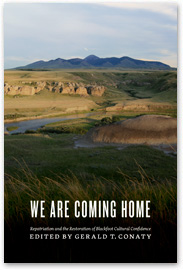
I spent last week holed up in a cabin, working on my forthcoming book, The Art of Relevance. One of the most powerful books I read while doing research was We are Coming Home: Repatriation and the Restoration of Blackfoot Cultural Confidence (read it free here, great appreciation to Bob Janes for sharing it with us). The book is a deep account of repatriation of spiritual objects from museums to native people, written by museum people and Blackfoot people together. I hope this synopsis might inspire you to read their full incredible story.
How do institutions build deep relationships with community partners? What does it look like when institutions change to become relevant to the needs of their communities--and vice versa?
Going deep is a process of institutional change, individual growth, and most of all, empathy. It requires all parties to commit. Institutional leaders have to be willing and able to reshape their traditions and practices. Community participants have to have to be willing to learn and change too. And everyone has to build new bridges together.
That’s what happened when the Blackfoot people and the Glenbow Museum worked together over the course of twenty years to repatriate sacred medicine bundles from the museum to the Blackfoot.
This story starts in 1960s, though of course, the story of the Blackfoot people and their dealings with museums started way before that. Blackfoot people are from four First Nations: Siksika, Kainai, Apatohsipiikani, and Ammskaapipiikani (Piikani). Together, the four nations call themselves the Niitsitapi, the Real People. The Blackfoot mostly live in what is now the province of Alberta, where the Glenbow Museum resides.
Like many ethnographic museums around the world, Glenbow holds a large number of artifacts in its collection that had belonged to native people. Many of the most holy objects in its collection were medicine bundles of the Blackfoot people.
A medicine bundle is a collection of sacred objects—mostly natural items—securely wrapped together. Traditionally, museums saw the bundles as important artifacts for researchers and the province, helping preserve and tell stories of the First Nations. Museums believed they held the bundles legally, purchased through documented sales. By protecting the bundles, museums were protecting important cultural heritage for generations to come. Many museums respected the bundles’ spiritual power by not putting them on public display. They made the bundles available for native people to visit, occasionally to borrow. But not to keep.
The Blackfoot people saw it differently. For the Blackfoot, these bundles were sacred living beings, not objects. They had been passed down from the gods for use in rituals and ceremonies. Their use, and their transfer among families, was an essential part of community life and connection with the gods. The bundles were not objects that could be owned. They were sacred beings, held in trust by different keepers over time. If they had been sold to museums, those sales were not spiritually valid. They were not for sale or purchase by any human or institution.
Why had the objects been sold in the first place? Many medicine bundles had been sold to museums in the mid-1900s, when Blackfoot ceremonial practices were dying out. The 1960s were a low point in Blackfoot ceremonial participation. Ceremonial practices had ceased to be relevant to most Blackfoot people, due in large part to a century-long campaign by the Canadian government to “reeducate” native people out of their traditions. Blackfoot people are as subject to societally-conferred notions of value as anyone else. In the 1960s, when Blackfoot culture was dying, some bundle keepers may have seen the bundles as more relevant as source of money for food than as sacred beings. Others may have sold their bundles to museums hoping the museums would keep them through the dark days, holding them safe until Blackfoot culture thrived again.
By the late 1970s, that time had come. Blackfoot people were eager to reclaim their culture. They were ready to use and share the bundles once more. The museums were not. Throughout the 1970s and 1980s, Blackfoot leaders attempted to repatriate medicine bundles back to their communities from various museums. Some tried to negotiate. Others tried to take bundles by force. In all cases, they ran into walls. While some museum professionals sympathized with the desires of the Blackfoot, they did not feel that those desires outweighed the legal authority and common good argument for keeping the sacred bundles. Museums held a firm line that they were preserving these objects for all humanity, which outweighed the claim of any particular group.
In 1988, the Glenbow Museum wandered into the fray. They mounted an exhibition, “The Spirit Sings: Artistic Traditions of Canada’s First Peoples,” that sparked native public protests. The exhibition included a sacred Mohawk mask which Mohawk representatives requested be removed from display because of its spiritual significance. More broadly, native people criticized the exhibition for presenting their culture without consulting them or inviting them into the process. The museum had broken the cardinal rule of self-determination: nothing about us, without us.
A year later, a new CEO, Bob Janes, came to Glenbow. Bob led a strategic planning process that articulated a deepened commitment to native people as “key players” in the development of projects related to their history and material culture. In 1990, Bob hired a new curator of ethnology, Gerry Conaty. That same year, Glenbow made its first loan of a medicine bundle--the Thunder Medicine Pipe Bundle--to the Blackfoot people.
The loan worked like this: the Weasel Moccasin family kept the Thunder Medicine Pipe Bundle for four months to use during ceremonies. They, they returned the bundle to the museum for four months. This cycle was to continue for as long as both parties agreed. This was a loan, not a transfer of ownership. There was no formal protocol or procedure behind it. It was the beginning of an experiment. It was the beginning of building relationships of mutual trust and respect.
In the 1990s, curator Gerry Conaty spent a great deal of time with Blackfoot people, in their communities. He was humbled and honored to participate as a guest in Blackfoot spiritual ceremonies. The more Gerry got to know leaders in the Blackfoot community, people like Daniel Weasel Moccasin and Jerry Potts and Allan Pard, the more he learned about the role of medicine bundles and other sacred objects in the Blackfoot community.
Gerry started to experience cognitive dissonance and a kind of dual consciousness of the bundles. As a curator, he was overwhelmed and uncomfortable when he saw people dancing with the bundles, using them in ways that his training taught him might damage them. But as a guest of the Blackfoot, he saw the bundles come alive during these ceremonies. He saw people welcome them home like long-lost relatives. He started to see the bundles differently. The Blackfoot reality of the bundles as living sacred beings began to become his reality.
Over time, Gerry and Bob became convinced that full repatriation—not loans—was the right path forward. The bundles had sacred lives that could not be contained. They belonged with the Blackfoot people.
But the conviction to change was just the beginning of the repatriation process. The institution had to change long-held perceptions of what the bundles were, who they belonged to, and how and why they should be used. This was a broad institutional learning effort, what we might call "cultural competency" today. During the 1990s, Glenbow started engaging Blackfoot people as advisors on projects. Gerry hired Blackfoot people wherever he could, as full participants in the curatorial team. Bob, Gerry, and Glenbow staff spent time in Blackfoot communities, learning what was important and relevant to them.
As Blackfoot elders sought to repatriate their bundles from museums, they also had to negotiate amongst themselves to reestablish the relevance and value of the bundles. They were relearning their own ceremonial rituals and the role of medicine bundles within them. They had to develop protocols for how they would adopt, revive, and recirculate the bundles in the community. Even core principles like the communal ownership of the bundles had to be reestablished. This process took just as much reshaping for Blackfoot communities as it did for the institution.
To complicate things further, the artifacts were actually the property of the province of Alberta, not Glenbow. The museum couldn’t repatriate the bundles without government signoff. For years they fought to get government approval. For years, the government resisted. Government officials suggested that the Blackfoot people make replicas of the bundles, so the originals could remain "safe" at the museum. The museum and their Blackfoot partners said no. As Piikani leader Jerry Potts put it: “Well, who is alive now who can put the right spirit into new bundles and make them the way they are supposed to be? Who is there alive who can do that? Some of these bundles are thousands of years old, and they go right back to the story of Creation when Thunder gave us the ceremony. Who is around who can sit there and say they can do that?”
The museum and Blackfoot leaders had to negotiate multiple realities. They had to negotiate on the province’s terms through legal battles and written contracts. They had to negotiate with museum staff about policies around collections ownership and management. They had to negotiate with native families about the use and transfer of the bundles in the community. In each arena, different approaches and styles were required. The people in the middle had to navigate them all.
But they kept building momentum through shared learning and loan projects. By 1998, the Siksika, Kainai, and Piikani had more than thirty sacred objects on loan from the Glenbow Museum. They were still fighting for the province to grant the possibility of full repatriation. Still, even as loans, some bundles had been ceremonially transferred several times throughout native communities, spreading knowledge and extending relationships. Glenbow staff had learned the importance of the bundles to entire communities. Native people were using, and protecting, and sharing the bundles. Even the Glenbow board bought in. The museum had become relevant to the native people on their terms. The native people had become relevant to the museum on theirs. They were more than relevant; they were connected, working together on a project of shared passion and commitment.
In 1999, they put their shared commitment to the test. It became clear that they were not going to succeed at convincing the provincial cultural officials of the value of full repatriation. CEO Bob Janes went to the Glenbow board of trustees and told them about the stalemate. A board member brokered a meeting with the premier of Alberta so that the museum could make the case for repatriation directly. It was risky; they were flagrantly ignoring the chain of provincial command. But the gamble worked. In 2000, the First Nations Sacred Ceremonial Objects Repatriation Act was passed in the province of Alberta. The bundles went home.
At its heart, the story of the Blackfoot repatriation is the story of two communities—that of the Blackfoot and that of Glenbow Museum—becoming deeply relevant to each other. When relevance goes deep, it doesn’t look like relevance anymore. It looks like work. It looks like friendships. It looks like shared meaning. As the museum staff understand more about what mattered to their Blackfoot partners, it came to matter to them, too. Leonard Bastien, then chief of the Piikani First Nation, put it this way: “Because all things possess a soul and can, therefore, communicate with your soul, I am inclined to believe that the souls of the many sacred articles and bundles within the Glenbow Museum touched Robert Janes and Gerry Conaty in a special way, whether they knew it or not. They have been changed in profound ways through their interactions with the Blood and Peigan people and their attendance at ceremonies.”
That is the power of deep relevance.
If you'd like to weigh in, please leave a comment below. If you are reading this via email and wish to respond, you can join the conversation here.
How do institutions build deep relationships with community partners? What does it look like when institutions change to become relevant to the needs of their communities--and vice versa?
Going deep is a process of institutional change, individual growth, and most of all, empathy. It requires all parties to commit. Institutional leaders have to be willing and able to reshape their traditions and practices. Community participants have to have to be willing to learn and change too. And everyone has to build new bridges together.
That’s what happened when the Blackfoot people and the Glenbow Museum worked together over the course of twenty years to repatriate sacred medicine bundles from the museum to the Blackfoot.
This story starts in 1960s, though of course, the story of the Blackfoot people and their dealings with museums started way before that. Blackfoot people are from four First Nations: Siksika, Kainai, Apatohsipiikani, and Ammskaapipiikani (Piikani). Together, the four nations call themselves the Niitsitapi, the Real People. The Blackfoot mostly live in what is now the province of Alberta, where the Glenbow Museum resides.
Like many ethnographic museums around the world, Glenbow holds a large number of artifacts in its collection that had belonged to native people. Many of the most holy objects in its collection were medicine bundles of the Blackfoot people.
A medicine bundle is a collection of sacred objects—mostly natural items—securely wrapped together. Traditionally, museums saw the bundles as important artifacts for researchers and the province, helping preserve and tell stories of the First Nations. Museums believed they held the bundles legally, purchased through documented sales. By protecting the bundles, museums were protecting important cultural heritage for generations to come. Many museums respected the bundles’ spiritual power by not putting them on public display. They made the bundles available for native people to visit, occasionally to borrow. But not to keep.
The Blackfoot people saw it differently. For the Blackfoot, these bundles were sacred living beings, not objects. They had been passed down from the gods for use in rituals and ceremonies. Their use, and their transfer among families, was an essential part of community life and connection with the gods. The bundles were not objects that could be owned. They were sacred beings, held in trust by different keepers over time. If they had been sold to museums, those sales were not spiritually valid. They were not for sale or purchase by any human or institution.
Why had the objects been sold in the first place? Many medicine bundles had been sold to museums in the mid-1900s, when Blackfoot ceremonial practices were dying out. The 1960s were a low point in Blackfoot ceremonial participation. Ceremonial practices had ceased to be relevant to most Blackfoot people, due in large part to a century-long campaign by the Canadian government to “reeducate” native people out of their traditions. Blackfoot people are as subject to societally-conferred notions of value as anyone else. In the 1960s, when Blackfoot culture was dying, some bundle keepers may have seen the bundles as more relevant as source of money for food than as sacred beings. Others may have sold their bundles to museums hoping the museums would keep them through the dark days, holding them safe until Blackfoot culture thrived again.
By the late 1970s, that time had come. Blackfoot people were eager to reclaim their culture. They were ready to use and share the bundles once more. The museums were not. Throughout the 1970s and 1980s, Blackfoot leaders attempted to repatriate medicine bundles back to their communities from various museums. Some tried to negotiate. Others tried to take bundles by force. In all cases, they ran into walls. While some museum professionals sympathized with the desires of the Blackfoot, they did not feel that those desires outweighed the legal authority and common good argument for keeping the sacred bundles. Museums held a firm line that they were preserving these objects for all humanity, which outweighed the claim of any particular group.
In 1988, the Glenbow Museum wandered into the fray. They mounted an exhibition, “The Spirit Sings: Artistic Traditions of Canada’s First Peoples,” that sparked native public protests. The exhibition included a sacred Mohawk mask which Mohawk representatives requested be removed from display because of its spiritual significance. More broadly, native people criticized the exhibition for presenting their culture without consulting them or inviting them into the process. The museum had broken the cardinal rule of self-determination: nothing about us, without us.
A year later, a new CEO, Bob Janes, came to Glenbow. Bob led a strategic planning process that articulated a deepened commitment to native people as “key players” in the development of projects related to their history and material culture. In 1990, Bob hired a new curator of ethnology, Gerry Conaty. That same year, Glenbow made its first loan of a medicine bundle--the Thunder Medicine Pipe Bundle--to the Blackfoot people.
The loan worked like this: the Weasel Moccasin family kept the Thunder Medicine Pipe Bundle for four months to use during ceremonies. They, they returned the bundle to the museum for four months. This cycle was to continue for as long as both parties agreed. This was a loan, not a transfer of ownership. There was no formal protocol or procedure behind it. It was the beginning of an experiment. It was the beginning of building relationships of mutual trust and respect.
In the 1990s, curator Gerry Conaty spent a great deal of time with Blackfoot people, in their communities. He was humbled and honored to participate as a guest in Blackfoot spiritual ceremonies. The more Gerry got to know leaders in the Blackfoot community, people like Daniel Weasel Moccasin and Jerry Potts and Allan Pard, the more he learned about the role of medicine bundles and other sacred objects in the Blackfoot community.
Gerry started to experience cognitive dissonance and a kind of dual consciousness of the bundles. As a curator, he was overwhelmed and uncomfortable when he saw people dancing with the bundles, using them in ways that his training taught him might damage them. But as a guest of the Blackfoot, he saw the bundles come alive during these ceremonies. He saw people welcome them home like long-lost relatives. He started to see the bundles differently. The Blackfoot reality of the bundles as living sacred beings began to become his reality.
Over time, Gerry and Bob became convinced that full repatriation—not loans—was the right path forward. The bundles had sacred lives that could not be contained. They belonged with the Blackfoot people.
But the conviction to change was just the beginning of the repatriation process. The institution had to change long-held perceptions of what the bundles were, who they belonged to, and how and why they should be used. This was a broad institutional learning effort, what we might call "cultural competency" today. During the 1990s, Glenbow started engaging Blackfoot people as advisors on projects. Gerry hired Blackfoot people wherever he could, as full participants in the curatorial team. Bob, Gerry, and Glenbow staff spent time in Blackfoot communities, learning what was important and relevant to them.
As Blackfoot elders sought to repatriate their bundles from museums, they also had to negotiate amongst themselves to reestablish the relevance and value of the bundles. They were relearning their own ceremonial rituals and the role of medicine bundles within them. They had to develop protocols for how they would adopt, revive, and recirculate the bundles in the community. Even core principles like the communal ownership of the bundles had to be reestablished. This process took just as much reshaping for Blackfoot communities as it did for the institution.
To complicate things further, the artifacts were actually the property of the province of Alberta, not Glenbow. The museum couldn’t repatriate the bundles without government signoff. For years they fought to get government approval. For years, the government resisted. Government officials suggested that the Blackfoot people make replicas of the bundles, so the originals could remain "safe" at the museum. The museum and their Blackfoot partners said no. As Piikani leader Jerry Potts put it: “Well, who is alive now who can put the right spirit into new bundles and make them the way they are supposed to be? Who is there alive who can do that? Some of these bundles are thousands of years old, and they go right back to the story of Creation when Thunder gave us the ceremony. Who is around who can sit there and say they can do that?”
The museum and Blackfoot leaders had to negotiate multiple realities. They had to negotiate on the province’s terms through legal battles and written contracts. They had to negotiate with museum staff about policies around collections ownership and management. They had to negotiate with native families about the use and transfer of the bundles in the community. In each arena, different approaches and styles were required. The people in the middle had to navigate them all.
But they kept building momentum through shared learning and loan projects. By 1998, the Siksika, Kainai, and Piikani had more than thirty sacred objects on loan from the Glenbow Museum. They were still fighting for the province to grant the possibility of full repatriation. Still, even as loans, some bundles had been ceremonially transferred several times throughout native communities, spreading knowledge and extending relationships. Glenbow staff had learned the importance of the bundles to entire communities. Native people were using, and protecting, and sharing the bundles. Even the Glenbow board bought in. The museum had become relevant to the native people on their terms. The native people had become relevant to the museum on theirs. They were more than relevant; they were connected, working together on a project of shared passion and commitment.
In 1999, they put their shared commitment to the test. It became clear that they were not going to succeed at convincing the provincial cultural officials of the value of full repatriation. CEO Bob Janes went to the Glenbow board of trustees and told them about the stalemate. A board member brokered a meeting with the premier of Alberta so that the museum could make the case for repatriation directly. It was risky; they were flagrantly ignoring the chain of provincial command. But the gamble worked. In 2000, the First Nations Sacred Ceremonial Objects Repatriation Act was passed in the province of Alberta. The bundles went home.
At its heart, the story of the Blackfoot repatriation is the story of two communities—that of the Blackfoot and that of Glenbow Museum—becoming deeply relevant to each other. When relevance goes deep, it doesn’t look like relevance anymore. It looks like work. It looks like friendships. It looks like shared meaning. As the museum staff understand more about what mattered to their Blackfoot partners, it came to matter to them, too. Leonard Bastien, then chief of the Piikani First Nation, put it this way: “Because all things possess a soul and can, therefore, communicate with your soul, I am inclined to believe that the souls of the many sacred articles and bundles within the Glenbow Museum touched Robert Janes and Gerry Conaty in a special way, whether they knew it or not. They have been changed in profound ways through their interactions with the Blood and Peigan people and their attendance at ceremonies.”
That is the power of deep relevance.
If you'd like to weigh in, please leave a comment below. If you are reading this via email and wish to respond, you can join the conversation here.
Wednesday, November 04, 2015
Women of Color Leading Essential, Activist Work in Cultural Institutions
| A new poster from the National Park Service, based on Rich Black's 2009 image. |
Here are three sources that have inspired me, from four activist women of color. Each of these women push the boundaries of cultural institutions in different ways, with digital and physical manifestations. But don't take my word for it. These women all have strong online presences, and I invite you to join me in learning from and supporting their work.
Ravon Ruffin and Amanda Figuero - Claiming Space for Brown Women in the Digital Museum Landscape
Based in Washington DC, Brown Girls Museum Blog is a new-ish site led by graduate students Ravon Ruffin and Amanda Figueroa. Ravon and Amanda are using several social media channels to explore and share museum exhibitions, programs, and projects. They are holding meetups, creating swag, and getting heard. Ravon spoke at MuseumNext last month (video here) about how communities of color claim space and power in the decentralized digital landscape. I was impressed by her expertise, and the example that Raven and Amanda are setting in strengthening their own voices as emerging leaders in this space. I can't wait to see what happens as they claim more space and power in museums, both through this project and individually in their careers.
Monica Montgomery - Building a Museum of Impact
In New York City, Monica Octavia Montgomery is pushing the boundaries of how we make relevant, powerful museum exhibits with the Museum of Impact. The Museum of Impact is a pop-up project of short-term exhibitions on urgent topics of social justice. Monica is a museum pioneer in two ways: she is using the museum medium to tackle tough social issues, and she is inventing new models for urgent, responsive, relevant programming. Monica publicly launched Museum of Impact this year with an exhibition on #blacklivesmatter, and she has projects on other themes--immigration, environment, mass incarceration--in the works. Want to know more? Check out this great interview with Monica by Elise Granata, and learn more about how you can get involved.
Betty Reid Soskin - Rewriting History in the National Parks
Yes, I DID save the best for last. Betty Reid Soskin is a nationally-renowned park ranger in Richmond, CA, and I am completely blown away by what I've learned from her in the short few weeks since I first heard her name. Betty is the oldest national park ranger in America at 94, but more importantly, Betty is an activist, a truth-seeker, and a storyteller. She speaks, writes, and fights for justice--in a federal historic site.
Betty gives tours at the Rosie the Riveter World War II Home Front National Historical Park, sharing her lived experience working there as a clerk during the war. Her blog, CBreaux Speaks, is one of the most eloquent I've ever read. She writes about race, history, parks, culture, and politics. She writes with power, and a voice unlike any I've encountered online. And she's been blogging for over 12 years.
Here's an excerpt from one of Betty Reid Soskin's earliest blog posts, from September 2003, when she was first asked to participate in the planning of the national park in which she now works. She was in the room as an elder, a civic leader, and a part of the site's history. But she immediately saw that she had an additional role to play: as a truth-teller of the full history of the site. Here's how she described it:
In the new plan before us, the planning team was taken on a bus tour of the buildings that will be restored as elements in the park. They're on scattered sites throughout the western part of the city. One of two housing complexes that has been preserved, Atchison and Nystrom Villages. They consist of modest bungalows, mostly duplexes and triplexes that were constructed "for white workers only." In many cases, the descendants of those workers still inhabit those homes. They're now historic landmarks and are on the national registry as such.
Since we're "telling the story of America through structures," how in the world do we tell this one? And in looking around the room, I realized that it was only a question for me. It held no meaning for anyone else.
No one in the room realizes that the story of Rosie the Riveter is a white woman's story. I, and women of color will not be represented by this park as proposed. Many of the sites names in the legislation I remember as places of racial segregation -- and as such -- they may be enshrined by a generation that has forgotten that history.
There is no way to explain the continuing presence of the 40% African American presence in this city's population without including their role in World War II. There continues to be a custodial attitude toward this segment of the population, with outsiders unaware of the miracle of those folks who dropped their hoes and picked up welding torches to help to save the world from the enemy. Even their grandchildren have lost the sense of mission and worthiness without those markers of achievement and "membership" in the effort to save the world.
And, yes, I did tell them. And, I have no idea what they'll do with the information, but I did feel a sense of having communicated those thoughts effectively to well-meaning professionals who didn't know what in hell to do the information.Fortunately, Betty Reid Soskind did a heck of a lot more than participating in that 2003 planning session. She became a leader in the development, and now the interpretation, of Rosie the Riveter National Historical Park.
Spend time on Betty's blog, and get inspired by her journey as an activist and a truth-teller, a passionate advocate for what cultural institutions can do to advance truth and justice for all. Support Ravon and Amanda and Monica, and their journeys to become leaders in our field. Our cultural universe is full of stars. When we deny ourselves the full brilliance of the stories and voices in that universe, we impoverish our own experiences. We cloud the potential for truth, beauty, and justice.
Let us all be amateur astronomers of culture, huddled around the powerful telescopes of diverse experience. Let us seek truth, beauty, and justice, and amplify them, together.
Labels:
cultural competency,
inclusion,
institutional change,
relevance,
web2.0
Wednesday, March 18, 2015
Community Science Workshops and Shared Authorship of Space: Interview with Emilyn Green
Imagine the most community-based science center possible. Imagine it in a poor, immigrant farmworker community. It exists. It thrives. In California. In a Community Science Workshop.
A couple months ago, I visited a Community Science Workshop for the first time in Watsonville, CA. I was awestruck. A small room, packed with gadgets, packed with fossils, packed with tools, packed with PEOPLE everywhere making and exploring and building and learning. The people were of all ages--moms with babies strapped to their fronts, six year-olds using skillsaws, pre-teens building robots, teenagers doing homework. There was a spirit of conviviality and purpose and helpfulness and Spanglish in the air. The design and feel of the place was different than any science center I'd ever experienced. I knew I could learn a lot from it.
I sat down with Emilyn Green, Executive Director of the Community Science Workshop Network, to learn more about their history, design, and engagement strategy.
Can you give me the overview of Community Science Workshops? What are they and where did they come from?
A Community Science Workshop is a place for kids to tinker, make, and explore their world through science. The first one was started in 1991 by a San Francisco educator, Dan Sudran, in his garage. The Exploratorium is great, but it wasn't super-accessible. Dan was living in the Mission neighborhood, which at the time was very kid-dense, mostly first-generation immigrants, and Dan noticed that when he was messing around in his garage with physics gadgets, he could not keep the kids in his neighborhood out of his garage. They were so fascinated and wanted to be there every day.
There are lots of great science museum resources, but not where these kids can walk after school. In most cases, they're not places where kids can go by themselves at all.
So the Community Science Workshop model is to put a drop-in, FREE community science center in a place that is walkable to kids' lives and schools. In a place where kids are already walking around after school.
The core program is a permanent, dedicated physical space, full of interactive hands-on physical exhibits, as well as a tinkering and making space, and recycled materials. Most Workshops also run a wide range of additional programs - supplemental school day programs, afterschool programs, mobile units that go to housing projects. There are a whole bunch of programs to disseminate the science but the central workshop space is the heart of it.
Where do Community Science Workshops fit in the informal science landscape?
It's kind of tricky. We don't fit the more common templates. The best explanation is "community science center." But in the more traditional lexicon, these might be defined as "informal spaces."
Now that there is a new emphasis on "ecosystems of STEM learning" - for us, that's really helpful. Our programs end up being the hub of the local science learning ecosystem--especially in communities where there isn't a science center for miles in any direction.
How are Workshop locations selected?
The first one was in the Mission. We received two rounds of NSF funding in the 1990s to expand. We've focused on farmworker communities--there are so many kids in these communities throughout California. At that time, we expanded to Watsonville, where strawberries come from. And Fresno in the Central Valley--a city of 500,000, hundreds of miles from the closest science center. And a couple other sites that didn't make it financially (more on that later).
I came on in 2010 to start the statewide nonprofit network. At that point, we opened three new locations: Sanger, Greenfield, and a new San Francisco workshop in the Excelsior neighborhood because the Mission has changed so dramatically. The Mission location is still a useful hub for San Francisco school programs. Excelsior is now the walkable neighborhood space.
What happened to the ones that folded?
We received NSF funding for three years and then it cut off. In places that succeeded, at that point, a local coalition was in place to fund the Workshop. Where it didn't work, no local support stepped up. That taught us a lot. Now, when people are interested in starting one, we emphasize permanence. It takes a local coalition of people who are really committed to this to have a program that lasts.
Who are those local coalitions?
We're really different from traditional science centers in our funding model. We don't have paying members. We're not going to do that. It's not a Community Science Workshop if it's not free to participants. In fact, we have almost no individual donors. We have a few shining, beloved exceptions, but that's not a significant part of our model at this time.
So we tend to have three legs of support: municipal, grants/donations, and fee for service (usually with the school district). The municipal support can be actual funding - from Parks and Rec, or Environmental Education/Public Works in Watsonville - or a free building, or free access to a van, or materials... or free access to the dump to get materials. Several Community Science Workshops also get Measure S grants - gang prevention grants - through their cities. Grants come from community foundations, small local family foundations, local businesses. And then the fee for service is mostly school districts that contract with the Workshop for science enrichment/science instruction.
What unique design elements make Community Science Workshops work?
Geography is key. We tend to overemphasize it, because it's the initial requirement for any kind of success in these communities. Kids in these neighborhoods are wandering around alone after school. So if kids can walk to us, they can participate.
Once in the space, there are a bunch of design features that continue to be about access. Our fundamental premise is that kids are really interested in stuff. Given a wide variety of stuff, they will find something that they are excited about and will take on projects. We assume the motivation is there. The interest is there. So if a kid is not engaging, it's likely some barrier to access.
One thing you'll notice when you walk in is a ton of user-generated content. Most is hand-made, by participants or staff or parents, and that is everything from our signage to our exhibits.
We tend to be fully bilingual where appropriate. Our staff is almost always Spanish/English bilingual. And we hire from the community. Over 30% of our staff statewide are either former Workshop students or parent volunteers. That's an important design principle for the space - who the kids see when they enter the space.
We have some considerations about height and accessibility. We make sure that kids can grab materials and tools without staff intervention. Part of this is practical: you can't facilitate making and tinkering for 30 kids if you have to hand them everything they need. And it shows kids that they can be the agents of their own learning.
And then there's the most important design element - it's MESSY. We've been playing around with different ways to describe this and not terrify people. It's not messy like “vermin-infested”. It looks like a space that is used by humans every day. It's "purposfully messy." It's organized enough so people coming in can learn the layout, but it's the opposite of sterile. Surfaces are dense, and covered, and richly layered, and there is nothing in the room that implies "don't touch me or you'll get in trouble." That bar is pretty low for kids - they really need to know they are welcome to explore.
I loved the feeling of the space. It made me think of the Spanish word "ambiente"--that convivial, welcoming feeling. It also made me think about some of what we learned in a recent ethnographic study in which some Latino moms talked about "American events being so organized, whereas Latin events have joyful chaos." I know that most of your design focus is on kids. Do you think there is also a cultural/ethnic aspect to the kind of access and design you use?
I feel very careful talking about the ways that the particular populations who we choose to work with for social justice reasons are also the people who make our work possible because of cultural expectations. For example, kids and tools. It's much easier for us to work with kids with power tools in these Workshops than it might be with other families because a lot of these parents use tools in their own lives. They are comfortable with them.
I was amazed by how community-based and authentic it feels. Many science centers struggling to engage "underserved" people with informal science. You are succeeding. What do you think is the difference?
I come back to geography. Easy access to the space. When I talk with people in science centers, some really dedicated people working on these questions, they acknowledge that geography is a big hurdle they have to get over.
But there also is a sense of community ownership. For example, the Exploratorium is an extraordinarily participatory museum, but it's not nearly as participatory as a Community Science Workshop. Any big museum has barriers and limitations to full community ownership. Anyone walking into a CSW could repair a broken exhibit--anytime.
And that's the way we respect the contributions of the families we are working with. They are authors in the space.
To make a sweeping generalization, it seems that the folks we work with--working class people, people who work with their hands for a living, people with larger extended families - are very comfortable with spaces where multiple people are authors. They are comfortable with shared authorship of space and events. Whereas formal organizations have a harder time facilitating a shared sense of space and events.
Really interesting. So there is authorship, but no bylines.
No visible bylines. But they still exist informally. The bylines are in the community’s awareness of the space. "Aurora made that sign." "I helped paint that sign." "I was here when Sal was working on that." People know, but they know based on their real experience of it in the space.
When I visited, it was so clear that there are so many people who use the Workshop again and again, who build things over time, who get involved in different projects for different reasons.
Yes. And it's hard for us to document. Half of our attendance per year is in enrollment and school-based programs, but half is in our drop-in spaces, where we don't track participants at all. We know anecdotally that a lot of these people are repeating and deepening their participation, but we don't have the data.
We're just starting to interview our alumni now and creating a catalogue of their stories. It's powerful. But that's not the focus of the program. The focus of the program is to make it work every day.
Big thanks to Emilyn Green and the Community Science Workshop Network for sharing insights in this post. Emilyn will be checking in on the comments here and can respond to your questions. If you are reading this via email and would like to share a comment, you can join the conversation here.
A couple months ago, I visited a Community Science Workshop for the first time in Watsonville, CA. I was awestruck. A small room, packed with gadgets, packed with fossils, packed with tools, packed with PEOPLE everywhere making and exploring and building and learning. The people were of all ages--moms with babies strapped to their fronts, six year-olds using skillsaws, pre-teens building robots, teenagers doing homework. There was a spirit of conviviality and purpose and helpfulness and Spanglish in the air. The design and feel of the place was different than any science center I'd ever experienced. I knew I could learn a lot from it.
I sat down with Emilyn Green, Executive Director of the Community Science Workshop Network, to learn more about their history, design, and engagement strategy.
Can you give me the overview of Community Science Workshops? What are they and where did they come from?
A Community Science Workshop is a place for kids to tinker, make, and explore their world through science. The first one was started in 1991 by a San Francisco educator, Dan Sudran, in his garage. The Exploratorium is great, but it wasn't super-accessible. Dan was living in the Mission neighborhood, which at the time was very kid-dense, mostly first-generation immigrants, and Dan noticed that when he was messing around in his garage with physics gadgets, he could not keep the kids in his neighborhood out of his garage. They were so fascinated and wanted to be there every day.
There are lots of great science museum resources, but not where these kids can walk after school. In most cases, they're not places where kids can go by themselves at all.
So the Community Science Workshop model is to put a drop-in, FREE community science center in a place that is walkable to kids' lives and schools. In a place where kids are already walking around after school.
The core program is a permanent, dedicated physical space, full of interactive hands-on physical exhibits, as well as a tinkering and making space, and recycled materials. Most Workshops also run a wide range of additional programs - supplemental school day programs, afterschool programs, mobile units that go to housing projects. There are a whole bunch of programs to disseminate the science but the central workshop space is the heart of it.
Where do Community Science Workshops fit in the informal science landscape?
It's kind of tricky. We don't fit the more common templates. The best explanation is "community science center." But in the more traditional lexicon, these might be defined as "informal spaces."
Now that there is a new emphasis on "ecosystems of STEM learning" - for us, that's really helpful. Our programs end up being the hub of the local science learning ecosystem--especially in communities where there isn't a science center for miles in any direction.
How are Workshop locations selected?
The first one was in the Mission. We received two rounds of NSF funding in the 1990s to expand. We've focused on farmworker communities--there are so many kids in these communities throughout California. At that time, we expanded to Watsonville, where strawberries come from. And Fresno in the Central Valley--a city of 500,000, hundreds of miles from the closest science center. And a couple other sites that didn't make it financially (more on that later).
I came on in 2010 to start the statewide nonprofit network. At that point, we opened three new locations: Sanger, Greenfield, and a new San Francisco workshop in the Excelsior neighborhood because the Mission has changed so dramatically. The Mission location is still a useful hub for San Francisco school programs. Excelsior is now the walkable neighborhood space.
What happened to the ones that folded?
We received NSF funding for three years and then it cut off. In places that succeeded, at that point, a local coalition was in place to fund the Workshop. Where it didn't work, no local support stepped up. That taught us a lot. Now, when people are interested in starting one, we emphasize permanence. It takes a local coalition of people who are really committed to this to have a program that lasts.
Who are those local coalitions?
We're really different from traditional science centers in our funding model. We don't have paying members. We're not going to do that. It's not a Community Science Workshop if it's not free to participants. In fact, we have almost no individual donors. We have a few shining, beloved exceptions, but that's not a significant part of our model at this time.
So we tend to have three legs of support: municipal, grants/donations, and fee for service (usually with the school district). The municipal support can be actual funding - from Parks and Rec, or Environmental Education/Public Works in Watsonville - or a free building, or free access to a van, or materials... or free access to the dump to get materials. Several Community Science Workshops also get Measure S grants - gang prevention grants - through their cities. Grants come from community foundations, small local family foundations, local businesses. And then the fee for service is mostly school districts that contract with the Workshop for science enrichment/science instruction.
What unique design elements make Community Science Workshops work?
Geography is key. We tend to overemphasize it, because it's the initial requirement for any kind of success in these communities. Kids in these neighborhoods are wandering around alone after school. So if kids can walk to us, they can participate.
Once in the space, there are a bunch of design features that continue to be about access. Our fundamental premise is that kids are really interested in stuff. Given a wide variety of stuff, they will find something that they are excited about and will take on projects. We assume the motivation is there. The interest is there. So if a kid is not engaging, it's likely some barrier to access.
One thing you'll notice when you walk in is a ton of user-generated content. Most is hand-made, by participants or staff or parents, and that is everything from our signage to our exhibits.
We tend to be fully bilingual where appropriate. Our staff is almost always Spanish/English bilingual. And we hire from the community. Over 30% of our staff statewide are either former Workshop students or parent volunteers. That's an important design principle for the space - who the kids see when they enter the space.
We have some considerations about height and accessibility. We make sure that kids can grab materials and tools without staff intervention. Part of this is practical: you can't facilitate making and tinkering for 30 kids if you have to hand them everything they need. And it shows kids that they can be the agents of their own learning.
And then there's the most important design element - it's MESSY. We've been playing around with different ways to describe this and not terrify people. It's not messy like “vermin-infested”. It looks like a space that is used by humans every day. It's "purposfully messy." It's organized enough so people coming in can learn the layout, but it's the opposite of sterile. Surfaces are dense, and covered, and richly layered, and there is nothing in the room that implies "don't touch me or you'll get in trouble." That bar is pretty low for kids - they really need to know they are welcome to explore.
I loved the feeling of the space. It made me think of the Spanish word "ambiente"--that convivial, welcoming feeling. It also made me think about some of what we learned in a recent ethnographic study in which some Latino moms talked about "American events being so organized, whereas Latin events have joyful chaos." I know that most of your design focus is on kids. Do you think there is also a cultural/ethnic aspect to the kind of access and design you use?
I feel very careful talking about the ways that the particular populations who we choose to work with for social justice reasons are also the people who make our work possible because of cultural expectations. For example, kids and tools. It's much easier for us to work with kids with power tools in these Workshops than it might be with other families because a lot of these parents use tools in their own lives. They are comfortable with them.
I was amazed by how community-based and authentic it feels. Many science centers struggling to engage "underserved" people with informal science. You are succeeding. What do you think is the difference?
I come back to geography. Easy access to the space. When I talk with people in science centers, some really dedicated people working on these questions, they acknowledge that geography is a big hurdle they have to get over.
But there also is a sense of community ownership. For example, the Exploratorium is an extraordinarily participatory museum, but it's not nearly as participatory as a Community Science Workshop. Any big museum has barriers and limitations to full community ownership. Anyone walking into a CSW could repair a broken exhibit--anytime.
And that's the way we respect the contributions of the families we are working with. They are authors in the space.
To make a sweeping generalization, it seems that the folks we work with--working class people, people who work with their hands for a living, people with larger extended families - are very comfortable with spaces where multiple people are authors. They are comfortable with shared authorship of space and events. Whereas formal organizations have a harder time facilitating a shared sense of space and events.
Really interesting. So there is authorship, but no bylines.
No visible bylines. But they still exist informally. The bylines are in the community’s awareness of the space. "Aurora made that sign." "I helped paint that sign." "I was here when Sal was working on that." People know, but they know based on their real experience of it in the space.
When I visited, it was so clear that there are so many people who use the Workshop again and again, who build things over time, who get involved in different projects for different reasons.
Yes. And it's hard for us to document. Half of our attendance per year is in enrollment and school-based programs, but half is in our drop-in spaces, where we don't track participants at all. We know anecdotally that a lot of these people are repeating and deepening their participation, but we don't have the data.
We're just starting to interview our alumni now and creating a catalogue of their stories. It's powerful. But that's not the focus of the program. The focus of the program is to make it work every day.
Big thanks to Emilyn Green and the Community Science Workshop Network for sharing insights in this post. Emilyn will be checking in on the comments here and can respond to your questions. If you are reading this via email and would like to share a comment, you can join the conversation here.
Wednesday, December 03, 2014
Will They Play in Pyongyang? Culture, Geography, and Participation
The objections started in Texas. During a workshop on museum visitor participation, someone spoke up and objected: "this might work in California, but it will never work in Texas."
Then in Australia: "this might work in America, but it will never work in Australia."
In New Zealand: "this might work in Australia, but it will never work in New Zealand."
For years, I've heard some version of this refrain. For the most part, I discounted it. I saw how participatory techniques were working in diverse museums around the world. I felt and continue to feel that everyone, everywhere, wants to be heard in some way. This is a human desire. It is not culturally-determined. There is no country or city or institution where visitors don't want to make a connection.
What may be culturally-determined, however, is HOW people want to participate. In different countries, I've noticed broad trends in how people feel most comfortable sharing their voice. For example:
I've been thinking about this a lot recently in the context of cultural inclusion. Here are two observations about visitor participation:
Consider a simple activity that invites people to describe their identity using a simulated passport. For many people, it's empowering to name oneself as a person of a certain background, ethnicity, interests, etc. But for others, it can feel like unwelcome exposure, a reminder of the frustrations of legal status, or another nudge of how they don't fit into society's boxes.
I try to be attentive to whether an activity systematically excludes certain people in the nature of how or what it invites... and in my current work, to especially focus on participatory activities that empower people who lack voice in other venues.
Here are the questions that help me think about this:
Then in Australia: "this might work in America, but it will never work in Australia."
In New Zealand: "this might work in Australia, but it will never work in New Zealand."
For years, I've heard some version of this refrain. For the most part, I discounted it. I saw how participatory techniques were working in diverse museums around the world. I felt and continue to feel that everyone, everywhere, wants to be heard in some way. This is a human desire. It is not culturally-determined. There is no country or city or institution where visitors don't want to make a connection.
What may be culturally-determined, however, is HOW people want to participate. In different countries, I've noticed broad trends in how people feel most comfortable sharing their voice. For example:
- American museum visitors often feel comfortable sharing their own opinions/stories/creative expression. We have a healthy (or unhealthy) sense of self and individuality, and it shows in a million post-it talk-back walls in museum exhibitions.
- European museum visitors appear more comfortable engaging in interpersonal dialogue and social games with strangers. While they may not be as comfortable as Americans with "me" experiences, they are much more up for "we" activities.
- In Asia, I've noticed museum visitors are willing--enthusiastic, even--to take photos with strangers. To pose with them. To find favorite artifacts together and say cheese. I've never seen that kind of openness with strangers and cameras in the US or Europe.
I've been thinking about this a lot recently in the context of cultural inclusion. Here are two observations about visitor participation:
- Participatory activities invite people to engage in new ways that may disrupt traditional norms of interaction. In this frame, any kind of participatory activity could work, anywhere. Why restrict people to barriers based on cultural norms when the whole point is to create opportunities beyond them? The way visitors engage--or don't--should not limited by culture or geography.
- Participatory activities work best when people feel comfortable and confident getting involved. In this frame, cultural starting points matter a lot. Is that activity an opportunity or a threat? Am I sharing my voice or being exposed? The way visitors engage--or don't--may have a lot to do with their cultural starting point.
Consider a simple activity that invites people to describe their identity using a simulated passport. For many people, it's empowering to name oneself as a person of a certain background, ethnicity, interests, etc. But for others, it can feel like unwelcome exposure, a reminder of the frustrations of legal status, or another nudge of how they don't fit into society's boxes.
I try to be attentive to whether an activity systematically excludes certain people in the nature of how or what it invites... and in my current work, to especially focus on participatory activities that empower people who lack voice in other venues.
Here are the questions that help me think about this:
- Who do we most want to empower to participate in this activity?
- What invitation to engage will feel most compelling to our target participants?
- How might that invitation exclude or turn off other prospective participants?
- Are we ok with that?
How do you think about this question of culture, geography, and participatory experiences?
Labels:
cultural competency,
design,
inclusion,
participatory museum
Wednesday, September 10, 2014
But What About Quality?
| Image courtesy Museum Quality Dance. Photo by Carrie Meyer. |
One, from a museum director. The question that comes up every time, the question so big it deserves the impropriety of all caps: BUT WHAT ABOUT QUALITY?
No one wants to do crappy work. Everyone wants quality, in one way or another.
The word "quality" is often code for aesthetic quality, as judged by a specific set of cultural expectations and preferences.
But just as its definition suggests, quality is itself a quality. Quality Shakespearian theater is different from quality contemporary dance. Quality is mutable and multitudinous. It is not code for one idea. It can unlock several.
Here, in no particular order, are ten different kinds of quality in arts experiences:
- AESTHETIC: is it beautiful?
- TECHNICAL: is it masterful?
- INNOVATIVE: is it cutting edge?
- INTERPRETATIVE: can people understand it?
- EDUCATIONAL: can people learn from it?
- RELEVANT: can people relate to it?
- PARTICIPATORY: can people get involved or contribute to it?
- ACADEMIC: does it produce new research or knowledge?
- BRIDGING: does it spark unexpected connections?
- IGNITING: does it inspire people to action?
- A dry exhibition, diving into an arcane topic. High academic quality, low igniting quality.
- A community-based exhibition, full of life but rife with amateur design and poor editing. High participatory quality, low technical quality.
- An edgy contemporary art show that alienates and confuses many visitors. High innovative quality, low relevant quality.
The next time someone asks you, "But what about quality?," ask them: "What do you mean by that?"
Invite the conversation about forms of quality, and the different outcomes of different forms. Define what quality means for your goals, for your project, for your institution. And then proceed with the confidence that you are going to do the best damn job you can to achieve the kind of quality you seek.
Labels:
Core Museum 2.0 Ideas,
cultural competency,
design
Wednesday, July 09, 2014
Learning Cultural Competency through Social Media
What if there was a place where we could learn more about the experiences of people who are totally different from us? Where we could hear directly, in their own words, what they love, hate, fear, desire, dream?
There is that place. It is called the Web.
I don't care who you are interested in learning more about--people of a particular race/ethnicity, gender, political affiliation, physical ability, generation, sexual orientation--there is a bubble on the Web populated by them. People often complain that social media can become an echo chamber to reinforce pre-existing beliefs and expectations. It's true. The extreme atomization and diversity of media sources can enable people to burrow into mirrored caves.
But most of the Web is open. Which means you can go into whatever cave you want--including those occupied by people who come from different worlds from you.
Earlier this spring, I decided to go on a mission to use social media to increase my cultural competency around Latino experiences, issues, and interests. At our museum, we're making a big effort to increase our engagement with local Latino families. Alongside work we are doing locally with specific neighborhoods, individuals, and organizations, I wanted to use the Web to learn more about Latino issues generally.
I didn't do anything fancy; I just shifted my informal news diet. I eliminated some blogs and podcasts from my reading list that reinforced information I already knew. I took a break from my regular diet of feminist-tinted news. I used the time I had carved out to tap into new sources related to the Latino experience and people of color.
How did I find these sources? I started by:
There is that place. It is called the Web.
I don't care who you are interested in learning more about--people of a particular race/ethnicity, gender, political affiliation, physical ability, generation, sexual orientation--there is a bubble on the Web populated by them. People often complain that social media can become an echo chamber to reinforce pre-existing beliefs and expectations. It's true. The extreme atomization and diversity of media sources can enable people to burrow into mirrored caves.
But most of the Web is open. Which means you can go into whatever cave you want--including those occupied by people who come from different worlds from you.
Earlier this spring, I decided to go on a mission to use social media to increase my cultural competency around Latino experiences, issues, and interests. At our museum, we're making a big effort to increase our engagement with local Latino families. Alongside work we are doing locally with specific neighborhoods, individuals, and organizations, I wanted to use the Web to learn more about Latino issues generally.
I didn't do anything fancy; I just shifted my informal news diet. I eliminated some blogs and podcasts from my reading list that reinforced information I already knew. I took a break from my regular diet of feminist-tinted news. I used the time I had carved out to tap into new sources related to the Latino experience and people of color.
How did I find these sources? I started by:
- subscribing to some mainstream aggregators, like Huffington Post Latino Voices, Latino USA, Colorlines, Codeswitch.
- reaching out to Salvador Acevedo, a brilliant marketing strategist who focuses on Latinos. Salvador gave me suggestions of websites and influencers to check out. I spent a few hours hunting around and subscribed to a few that related to my interests.
- following a few hashtags and people associated with these sources on Twitter, checking out the lists of who they follow, and adding more people to my Twitter feed through their networks.
That's it. It's not a complex educational activity. I'm not segmenting or diving into very specific areas. I'm wading in the waters of someone else's media landscape.
In three months of doing this passively, I've already noticed some specific changes to my work practice. Here are just two examples:
- It has made us more savvy surveyors. There has been a lot of coverage in the Latino/PoC mediaverse about how Latinos self-identify racially on the US census. Blog posts like this one--which I probably never would have seen in my old news diet--have informed conversations at our museum about how we ask visitors to identify in demographic surveys. We are in a year of developing assessment tools for our programming, so this issue is highly relevant to our work, and these news sources help us address weaknesses in our approach.
- It has influenced exhibition content. I'm neck-deep in a redevelopment of our permanent history gallery about Santa Cruz County. Reading news from a Latino perspective has helped me consistently encounter non-dominant ways to look at California history. Yes, these narratives are also present in some of the advisory discussions and reference materials we are using in developing exhibition content. But hearing those counter-narratives reinforced daily in my news diet builds confidence in them and makes me more thoughtful about how to frame historical issues of immigration, labor, culture clash, and racism in the exhibition context.
Again, I don't want to suggest that this approach is ground-breaking or intensive. It's not. But it IS easy, and I have found it to be powerful as a context shift.
I spent years immersed in a feminist media landscape. I consumed news, pop culture, and media through that lens. Now, I'm trying out someone else's media landscape. I'm noticing how that lens is showing me things I didn't see before. It's focusing my attention differently. It's turning the Web into a window instead of a mirror.
Subscribe to:
Comments (Atom)