Showing posts with label social bridging. Show all posts

Thursday, December 07, 2017

Guest Post by Jasper Visser: Storytelling for Social Cohesion at Story House Belvédère

I first read about Story House Belvédère on Jasper Visser’s excellent blog, The Museum of the Future. This small, startup cultural project in Rotterdam works directly and intimately with community members to share their stories. It is a platform for social bridging and cultural exchange. Jasper enhanced his original post to share with you here. I hope you’ll be as charmed and inspired by Story House Belvédère as I am.

Story House Belvédère in Rotterdam, the Netherlands, is a magical place. On a beautiful location in a former jazz-era night club, a committed team works on storytelling activities to bring different communities in the city together, and contribute to a happier, more engaged city. They do so by making the stories of individuals and communities visible, and encouraging new encounters. In its short existence (it opened in 2013), the place has made a name for itself as a successful community-driven, innovative cultural initiative.

I visited Story House Belvédère as part of the new Intangible Cultural Heritage and Museum Projects I am involved in. I had heard a lot about Belvédère before my visit, so my expectations were high. The place surpassed them. I spoke with some of the people working there, especially founder Linda Malherbe.

What makes Story House Belvédère so special?

It is rooted in its diverse neighborhood and the people who live there.

Story House Belvédère is in Katendrecht, in southern Rotterdam. Katendrecht is a part of town that for over 125 years has been a home for migrants and newcomers to the city. The neighborhood is a mix of people and communities by design and has a rich social history. Currently, the neighborhood is being gentrified and its development, which tells a wider story about the city, is ongoing. The team found the current home of Belvédère almost by chance when they were looking for a temporary working space. But the location proved perfect. According to Linda, the project could not have been imagined and developed anywhere else in the city. A diversity of people and stories is the reason it exists.

It started as a community project rooted in relationship-building.

Before there was a house, the team behind Belvédère organised a community-focused social photography exhibition outdoors on one of the quais in the south of Rotterdam. It was an exhibition of group portraits of the many communities in the area. City officials doubted the idea of an exhibition in the public space in a part of town they considered dangerous. They said, "you will get shot at, and in two weeks everything will be destroyed." But they were wrong. The exhibition was up for a year and a half. When it ended, the portrayed communities took their portraits home, starting relationships with Belvédère which in some cases still persist.

After the photography show, the team was encouraged to continue their work. They focused on one of the key events in Rotterdam history: the bombing of the city at the beginning of the Second World War. Inspired by Story Corps, they toured the neighborhood with a mobile recording studio and captured memories of the bombing. They created storytelling events and shows, which prompted other communities to start telling their own stories. As Linda says, “Every story inspires a new story.”

The success of the storytelling events encouraged the team to look for a permanent location. They found it in the old jazz club/boxing gym/neighborhood museum Belvédère, a building which dates back to 1894. Together with the communities they had worked with before, they are now renovating the building. In 2018 it will officially reopen. But currently you can visit when the door is unlocked - which is almost daily. After the formal reopening, they still expect to evolve. As Linda says, the process will never be finished, as people will always continue to add and make changes to the building to reflect new stories and ideas.

The community values of the team permeate the space and their projects.

Already you can feel Story House Belvédère is a special place. You feel it the moment you step into their warm and welcoming space. It feels like a living room, where everybody can be a friend. Even the coffee cups and the cookies are in style. The magic, of course, goes beyond aesthetics and is deeply embedded in the organization.

A small team is the driving force behind all projects. It is a committed, dynamic group of freelancers who care about the mission and magic of the place. The place they created is warm and welcoming, and yet it is their energy and enthusiasm that stuck with me most after my visit. I asked Linda to describe what defines the team, and received over a dozen characteristics:
  • A shared love for people 
  • They are good listeners 
  • Positively curious, and always asking new questions 
  • Actively looking for (a diversity of) people 
  • Etc. etc.
The approach the team takes to connect with communities and then connecting communities is straightforward. In projects, they build a profound relationship with one specific community, such as the Chinese, Bulgarians, or football hooligans. This relationship is based on a genuine interest and includes a long-term commitment to stay involved with each other. When I visited, a community member had made our delicious Bulgarian lunch. Such profound ties make it possible that when a new project focuses on another community, the team can personally invite people from other communities to join. In that way, they build bridges between communities. Everything starts with listening and being curious about the other, and then inviting people, as guests, to take part.

This approach permeates all activities of Story House Belvédère. If you rent the place for a private event such as a wedding, some spots at the event are reserved for people from other communities. So, if you’re interested in joining a Syrian wedding or Jewish Bar Mitzvah, you can. The reason this works is because of the personal ties between the team and the communities. The aim of Linda and her team is to create relationships with people that are everlasting.


Wednesday, November 29, 2017

Introducing #museumfitness, a Side Project where Art & Athletics Mix

When I have a day to myself, there are two things I like to do most in this world:
  1. work.
  2. work out.
To celebrate the confluence between these passions, some buddies and I have started an instagram account called @museumfitness. We are posting short museum-based exercise videos each week. I invite you to follow the account, send in your own videos (tagged #museumfitness), and sweat along with us at your institution.

While it's a silly project, #museumfitness is also a small attempt to break down unproductive divisions between "art people" and "sports people." Pop culture often tells us that intellect and sports don't mix. Some of my museum friends seem viscerally uncomfortable with athletics. Some of my fitness friends would never set foot in a museum. I believe that smarts and sports DO mix... and at least for me, they enhance each other.

I've been a nerd my whole life, and a jock since high school. When I was 14, I joined the water polo team. I spent every morning and evening in the pool. I loved it--the hard work, the yelling coach, sweat in my eyes and chlorine in my hair. I felt like part of something challenging and communal.

After high school, I stopped playing high-level sports but kept building my passion for social sweat. I boxed. Played ultimate frisbee. Climbed rocks. Played beach volleyball. Right now, when I'm not at work, I'm training for obstacle course races with a local team.

For me, sports are a way to push myself and to connect with people who are different from me--both skills that enhance my work as well.

I love challenges. Challenges at work can be messy and interpersonal. Challenges in athletics are simpler. Cleaner. How far can I run? How hard can I push myself? I can dig deep when I want to, and if I decide to quit, I'm not letting someone else down. When I challenge myself in sports, I train myself to be tougher in a low-stakes environment. That helps me confront challenges at work--which often come with emotional or political stakes--more confidently.

I love building social bridges. My museum focuses on it, and I really believe that building bridges across differences can build a better world. I get to practice bridging in my personal life through sports. My fitness friends come from all walks of life. They are more diverse than my colleagues economically and politically. Despite our differences, we trust each other and support each other. We work together to achieve impossible, trivial heights.

For no obvious reason, we have quite a few #museumfitness fanatics at the MAH. I love working with people who know how to push themselves beyond their comfort zones. I love working with people who aren't afraid to shoot for a big goal. I love working with people who are ready to dive in and support each other so we can reach that goal. I learned a lot of these lessons playing sports. I have no doubt you could acquire these skills in other ways. But I learned them--and keep learning them--through fitness.

If YOU are a closet member of the #museumfitness tribe, join us in bridging these divides. Take a five-minute pushup break in the office. Run up the stairs. Invite your colleagues to sweat along with you. Invite your gym-mates into your museum. And shoot a video for instagram. We'd love to have you as part of our team.

Wednesday, November 30, 2016

Let's Be Bridge-Builders

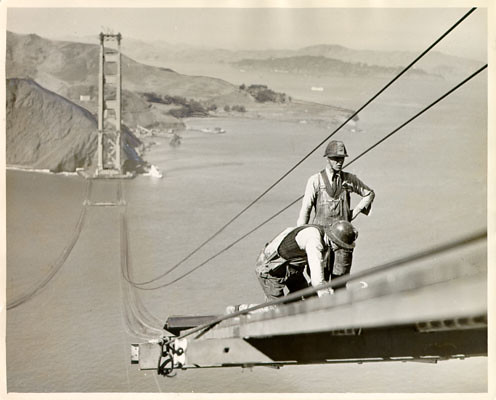
Two construction workers on the Golden Gate Bridge, San Francisco, 1935When you hear the word "community," what do you envision? I see people of all backgrounds, ethnicities, ages, and income levels. I see them laughing together. Learning together. Taking care of each other.

Most of us don't live this dream--yet. Most of us experience community in isolation, moving through a small cluster of bubbles: Work. School. Neighborhood. Soccer. We spend most of our days with people who look like us, who share our culture, background, and class.

In the wake of the 2016 US election, I've been thinking a lot about the bubbles in which we live. Bubbles protect, empower, and insulate us. But they can also lock us into fear, judgment, and insecurity.

When we break out of these bubbles and build bridges across our differences, we build stronger communities. We bridge through experiences that bring together people from all walks of life, in shared celebration, respect, and learning. Research shows that social bridges decrease racism, increase public safety, and improve community health. Building bridges makes communities more equitable. Bridges shrink gaps in housing, health care, and quality of life. And they makes all our lives richer as we expand beyond the bubbles of our personal experiences.

That's why our museum, the MAH in Santa Cruz, focuses on social bridging. Rather than operating in a bubble of “art people” or “history people,” we strive to connect ALL people in our county. Our unique value is not in targeting people but bridging across differences. Our staff are matchmakers for unlikely partners across the county: engineers and folkloric dancers presenting at monthly festivals. Artists and activists exhibiting their work. Homeless adults and history buffs improving a historic cemetery. Business leaders and street performers designing a new community plaza on the museum's front porch.

These projects help people build bridges--and community. Museum visitors tell us that "meeting new people" and "being part of a bigger community" are two of the things they love most about our museum.

I take no satisfaction in the extent to which this election demonstrates how important and impoverished social bridging is in the United States. I take hope, courage, and perseverance from the knowledge that we can do it. More of us. More deeply. More often.

We've got some work to do. Cultural institutions, and museums in particular, have traditionally been bubbles of privilege. Our walls kept more people and ideas out as they let in. But we have the capacity to turn those walls into doorways. We have the potential to use the diverse, generative ideas within our walls as building material for bridges beyond our walls.

Building bridges doesn't mean capitulating or compromising. It means standing on one edge of a canyon and making a sincere effort to connect to people on the other side. Not to colonize them. Not to become like them, or ask them to be like you. Not to apologize for who you are. To build a bridge. To get to know them. To understand more about what life is like on their side. To cross over and intersect, on their turf and yours--until it becomes our bridge, and our canyon.

If you are curious about bridge-building, I encourage you to:
  • Read. Check out Bowling Alone and Better Together, both by Robert Putnam. These books frame the concept of social bridging and offer both inspiring and dismaying examples from different sectors. Check out social psychology texts on "intergroup contact." Follow any of the many wonderful online resources produced by bubbles that are not your own. 
  • Learn more about the divides in your community. Be honest about what ledge you stand on, and learn what you can about those on the other side. Don't waste your energy learning about divides that you can't or won't bridge. Learn about the ones you can affect. Learn about the people down the street about whom you know nothing. They read different news stories than you, go to different coffee shops than you, dream different dreams than you. Learn about them.
  • Figure out what you can do to join the informal union of bridge builders in your community. Who's doing the work? To what end? Do people in your community need bridges to celebrate together across differences? To tackle a big issue? To talk things out? To look each other in the eye without fear?
In our community, we build bridges through art and history. We bring people together in joyful art-making, celebrating simple pleasures of passing the paintbrushes and singing along. We bring people together in multi-vocal storytelling, listening to each other's tales of where we came from and where we dream to go. We bring people together through the creative friction that comes when one art form or cultural tradition rubs up against another. We curate diverse audiences the same way we curate diverse exhibitions--because it's ultimately the people and their conversations about the objects that matter most.

We build bridges in full knowledge that rubbing up against new ideas and people is uncomfortable. It's not as marketable or profitable as reinforcing the existing bubble. But our comfortable bubbles lie to us. They are mirrored on the inside. They keep us from seeing the whole world. They can make us selfish and fearful.

I believe that culture workers can be bridge-builders. It's not easy to step off your ledge onto an uncertain bridge. It's even harder to invite others to do so. But when we do, we see more clearly. We open our hearts to the beautiful, breakable world. We build the bridges that form the backbone of the compassionate, complex, collective communities we deserve.

Wednesday, December 02, 2015

A Different Story of Thanksgiving: The Repatriation Journey of Glenbow Museum and the Blackfoot Nations

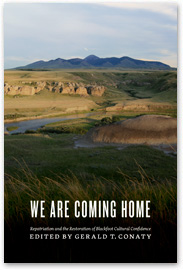
I spent last week holed up in a cabin, working on my forthcoming book, The Art of Relevance. One of the most powerful books I read while doing research was We are Coming Home: Repatriation and the Restoration of Blackfoot Cultural Confidence (read it free here, great appreciation to Bob Janes for sharing it with us). The book is a deep account of repatriation of spiritual objects from museums to native people, written by museum people and Blackfoot people together. I hope this synopsis might inspire you to read their full incredible story. 

How do institutions build deep relationships with community partners? What does it look like when institutions change to become relevant to the needs of their communities--and vice versa?

Going deep is a process of institutional change, individual growth, and most of all, empathy. It requires all parties to commit. Institutional leaders have to be willing and able to reshape their traditions and practices. Community participants have to have to be willing to learn and change too. And everyone has to build new bridges together.

That’s what happened when the Blackfoot people and the Glenbow Museum worked together over the course of twenty years to repatriate sacred medicine bundles from the museum to the Blackfoot. 

This story starts in 1960s, though of course, the story of the Blackfoot people and their dealings with museums started way before that. Blackfoot people are from four First Nations: Siksika, Kainai, Apatohsipiikani, and Ammskaapipiikani (Piikani). Together, the four nations call themselves the Niitsitapi, the Real People. The Blackfoot mostly live in what is now the province of Alberta, where the Glenbow Museum resides.

Like many ethnographic museums around the world, Glenbow holds a large number of artifacts in its collection that had belonged to native people. Many of the most holy objects in its collection were medicine bundles of the Blackfoot people.

A medicine bundle is a collection of sacred objects—mostly natural items—securely wrapped together. Traditionally, museums saw the bundles as important artifacts for researchers and the province, helping preserve and tell stories of the First Nations. Museums believed they held the bundles legally, purchased through documented sales. By protecting the bundles, museums were protecting important cultural heritage for generations to come. Many museums respected the bundles’ spiritual power by not putting them on public display. They made the bundles available for native people to visit, occasionally to borrow. But not to keep.

The Blackfoot people saw it differently. For the Blackfoot, these bundles were sacred living beings, not objects. They had been passed down from the gods for use in rituals and ceremonies. Their use, and their transfer among families, was an essential part of community life and connection with the gods. The bundles were not objects that could be owned. They were sacred beings, held in trust by different keepers over time. If they had been sold to museums, those sales were not spiritually valid. They were not for sale or purchase by any human or institution.

Why had the objects been sold in the first place? Many medicine bundles had been sold to museums in the mid-1900s, when Blackfoot ceremonial practices were dying out. The 1960s were a low point in Blackfoot ceremonial participation. Ceremonial practices had ceased to be relevant to most Blackfoot people, due in large part to a century-long campaign by the Canadian government to “reeducate” native people out of their traditions. Blackfoot people are as subject to societally-conferred notions of value as anyone else. In the 1960s, when Blackfoot culture was dying, some bundle keepers may have seen the bundles as more relevant as source of money for food than as sacred beings. Others may have sold their bundles to museums hoping the museums would keep them through the dark days, holding them safe until Blackfoot culture thrived again.

By the late 1970s, that time had come. Blackfoot people were eager to reclaim their culture. They were ready to use and share the bundles once more. The museums were not. Throughout the 1970s and 1980s, Blackfoot leaders attempted to repatriate medicine bundles back to their communities from various museums. Some tried to negotiate. Others tried to take bundles by force. In all cases, they ran into walls. While some museum professionals sympathized with the desires of the Blackfoot, they did not feel that those desires outweighed the legal authority and common good argument for keeping the sacred bundles. Museums held a firm line that they were preserving these objects for all humanity, which outweighed the claim of any particular group.

In 1988, the Glenbow Museum wandered into the fray. They mounted an exhibition, “The Spirit Sings: Artistic Traditions of Canada’s First Peoples,” that sparked native public protests. The exhibition included a sacred Mohawk mask which Mohawk representatives requested be removed from display because of its spiritual significance. More broadly, native people criticized the exhibition for presenting their culture without consulting them or inviting them into the process. The museum had broken the cardinal rule of self-determination: nothing about us, without us.

A year later, a new CEO, Bob Janes, came to Glenbow. Bob led a strategic planning process that articulated a deepened commitment to native people as “key players” in the development of projects related to their history and material culture. In 1990, Bob hired a new curator of ethnology, Gerry Conaty. That same year, Glenbow made its first loan of a medicine bundle--the Thunder Medicine Pipe Bundle--to the Blackfoot people.

The loan worked like this: the Weasel Moccasin family kept the Thunder Medicine Pipe Bundle for four months to use during ceremonies. They, they returned the bundle to the museum for four months. This cycle was to continue for as long as both parties agreed. This was a loan, not a transfer of ownership. There was no formal protocol or procedure behind it. It was the beginning of an experiment. It was the beginning of building relationships of mutual trust and respect.

In the 1990s, curator Gerry Conaty spent a great deal of time with Blackfoot people, in their communities. He was humbled and honored to participate as a guest in Blackfoot spiritual ceremonies. The more Gerry got to know leaders in the Blackfoot community, people like Daniel Weasel Moccasin and Jerry Potts and Allan Pard, the more he learned about the role of medicine bundles and other sacred objects in the Blackfoot community.

Gerry started to experience cognitive dissonance and a kind of dual consciousness of the bundles. As a curator, he was overwhelmed and uncomfortable when he saw people dancing with the bundles, using them in ways that his training taught him might damage them. But as a guest of the Blackfoot, he saw the bundles come alive during these ceremonies. He saw people welcome them home like long-lost relatives. He started to see the bundles differently. The Blackfoot reality of the bundles as living sacred beings began to become his reality.

Over time, Gerry and Bob became convinced that full repatriation—not loans—was the right path forward. The bundles had sacred lives that could not be contained. They belonged with the Blackfoot people.

But the conviction to change was just the beginning of the repatriation process. The institution had to change long-held perceptions of what the bundles were, who they belonged to, and how and why they should be used. This was a broad institutional learning effort, what we might call "cultural competency" today. During the 1990s, Glenbow started engaging Blackfoot people as advisors on projects. Gerry hired Blackfoot people wherever he could, as full participants in the curatorial team. Bob, Gerry, and Glenbow staff spent time in Blackfoot communities, learning what was important and relevant to them.

As Blackfoot elders sought to repatriate their bundles from museums, they also had to negotiate amongst themselves to reestablish the relevance and value of the bundles. They were relearning their own ceremonial rituals and the role of medicine bundles within them. They had to develop protocols for how they would adopt, revive, and recirculate the bundles in the community. Even core principles like the communal ownership of the bundles had to be reestablished. This process took just as much reshaping for Blackfoot communities as it did for the institution.

To complicate things further, the artifacts were actually the property of the province of Alberta, not Glenbow. The museum couldn’t repatriate the bundles without government signoff. For years they fought to get government approval. For years, the government resisted. Government officials suggested that the Blackfoot people make replicas of the bundles, so the originals could remain "safe" at the museum. The museum and their Blackfoot partners said no. As Piikani leader Jerry Potts put it: “Well, who is alive now who can put the right spirit into new bundles and make them the way they are supposed to be? Who is there alive who can do that? Some of these bundles are thousands of years old, and they go right back to the story of Creation when Thunder gave us the ceremony. Who is around who can sit there and say they can do that?”

The museum and Blackfoot leaders had to negotiate multiple realities. They had to negotiate on the province’s terms through legal battles and written contracts. They had to negotiate with museum staff about policies around collections ownership and management. They had to negotiate with native families about the use and transfer of the bundles in the community. In each arena, different approaches and styles were required. The people in the middle had to navigate them all.

But they kept building momentum through shared learning and loan projects. By 1998, the Siksika, Kainai, and Piikani had more than thirty sacred objects on loan from the Glenbow Museum. They were still fighting for the province to grant the possibility of full repatriation. Still, even as loans, some bundles had been ceremonially transferred several times throughout native communities, spreading knowledge and extending relationships. Glenbow staff had learned the importance of the bundles to entire communities. Native people were using, and protecting, and sharing the bundles. Even the Glenbow board bought in. The museum had become relevant to the native people on their terms. The native people had become relevant to the museum on theirs. They were more than relevant; they were connected, working together on a project of shared passion and commitment.

In 1999, they put their shared commitment to the test. It became clear that they were not going to succeed at convincing the provincial cultural officials of the value of full repatriation. CEO Bob Janes went to the Glenbow board of trustees and told them about the stalemate. A board member brokered a meeting with the premier of Alberta so that the museum could make the case for repatriation directly. It was risky; they were flagrantly ignoring the chain of provincial command. But the gamble worked. In 2000, the First Nations Sacred Ceremonial Objects Repatriation Act was passed in the province of Alberta. The bundles went home.

At its heart, the story of the Blackfoot repatriation is the story of two communities—that of the Blackfoot and that of Glenbow Museum—becoming deeply relevant to each other. When relevance goes deep, it doesn’t look like relevance anymore. It looks like work. It looks like friendships. It looks like shared meaning. As the museum staff understand more about what mattered to their Blackfoot partners, it came to matter to them, too. Leonard Bastien, then chief of the Piikani First Nation, put it this way: “Because all things possess a soul and can, therefore, communicate with your soul, I am inclined to believe that the souls of the many sacred articles and bundles within the Glenbow Museum touched Robert Janes and Gerry Conaty in a special way, whether they knew it or not. They have been changed in profound ways through their interactions with the Blood and Peigan people and their attendance at ceremonies.”

 That is the power of deep relevance.


If you'd like to weigh in, please leave a comment below. If you are reading this via email and wish to respond, you can join the conversation here.

Wednesday, April 29, 2015

Building Community: Who / How / Why

These are the slides and notes for the talk I gave at the American Alliance of Museums conference on Monday, April 27 about the Santa Cruz Museum of Art & History. There are links embedded to other posts that go deeper into specific topics.

For years, I’ve been associated with the idea of “visitor participation.” When I became the director of the Santa Cruz Museum of Art & History four years ago, I took this work with me. We invited community members in, to be active contributors, collaborators, and co-creators in our museum space.

We had incredible success transforming our institution into a vibrant cultural center. But when people told us what they loved about the museum, they didn’t use the word “participation.” They talked about community building.

I don’t think there is a way to directly build community. We can’t sit down and say, “let’s go build some community.”

Participation is one (of many) tactics for building community. As time has gone on, my attention has shifted from the tactic of participation to the outcome of building community. And so today I want to talk about building community: the who, the how, and the why of it.

WHO (slides 3-23)

"Community” is not an abstraction. It is a group of people connected by something shared. That something may be a place, an identity, an interest, a worldview.

The most important first step for any institution that seeks to “engage community” is to be specific about WHO you are talking about.

At the Santa Cruz Museum of Art & History, our community starts with geography. We exist for people who live in Santa Cruz County. We are unapologetic about focusing local. Even though Santa Cruz is a tourism destination, we mostly ignore tourists. Tourists can’t help us build community in Santa Cruz County if they are only in town for a day.

Focusing local helps us define our community by identity. We have partnered with the county-wide community assessment project to learn more about the demographics, interests, and needs of local residents.

In some ways, we do a good job engaging people who reflect our whole County. Our audience’s income diversity matches that of the County. We’re connecting with people across all age segments in our County. Right now, we're working hard to empower Latino residents to see themselves in our museum. We live in a City that is 19% Latino, in a County that is 33% Latino. Our visitors are about 8% Latino. If we want to reflect the identities of our community, we’ve got to focus on changing that.

At the same time, “identity” doesn't always mean demographics. For example, in Santa Cruz there is a huge community of creative people who identify as artists in non-traditional media. That’s why we partner with fire sculptors, knitters, graffiti artists, and bonsai growers. They are artists whose experience deserves a home in our institution alongside painters, photographers, and sculptors.

Finally, we define our community by affinity. We focus on people who are culturally curious, actively creative… but may not see a traditional arts institution as a place for them. We’re unapologetic about connecting people with history and with art in new ways, even if those ways are sometimes in conflict with more typical museum practice.

We think about this redefinition of affinity not just in terms of our programming but our internal structures as well. Some of our best volunteers come from the County court referral system. We're a place you can work off your traffic ticket. And that means we get volunteers who are A. very motivated to complete their hours and B. culturally curious but maybe not inclined to walk into a museum. They see "museum" on the list of options and they think: hey, I like history, I dig art, maybe this is a good option for me. We've hired amazing people out of this unorthodox volunteer pipeline.

Doing this work in partnership with our local community, in partnership with people who have an affinity for active cultural experiences, we’ve been able to grow rapidly and tremendously. Over four years, we’ve tripled our annual attendance and more than doubled our budget and staff and programs.

Last year, our board and staff came together to develop a “theory of change” that connects the activities we do to the impact we seek. We decided as an institution to focus on just one impact statement: “our community grows stronger and more connected.” It feels amazing to be so aligned and clear about purpose. We’re making our focus on community more overt, tangible, and measurable.

HOW (slides 24-42)

There are three “tracks” to our theory of change: individual empowerment, social bonding, and social bridging.

Let’s start with empowerment. We seek to empower our visitors to raise their own civic and creative voices. A lot of museum visits can actually be disempowering, making people feel they are not smart enough or cultured enough to get it. We want everyone to leave the museum feeling that they could become an historian or artist—a civic and/or creative agent of change.

Empowering people starts by involving and including them. Showing that their voice matters. This starts right when you walk into our museum, where you can share opinions about how to improve the institution on a comment wall. We work with people on programs in their neighborhoods, relevant to their stories, so that people get personally connected. And we look for pathways—whether inside or beyond the museum—for people to go deeper. This might mean taking on a project in our historical archives, starting a studio art practice, or getting involved in local issues and organizations. 

Empowerment is the “individual” side of our theory of change. The other side is about building social capital through bonding and bridging.

These terms come from Robert Putnam, Harvard researcher and author of Bowling Alone. Both bonding and bridging contribute to building community. We bond with people who are like us. We bridge with people who are different from us.

Putnam and other researchers have collected lots of data demonstrating that in the past 50 years in America, bonding has increased and bridging has decreased. We live in an increasingly polarized world, with fewer and fewer opportunities to connect with people from different backgrounds and perspectives. We are more bonded than ever, and more segregated from each other in our respective bonded spaces as a result.

Museums are great places for bonding. Decades of research have shown that one of the primary reasons people go to museums is to bond with friends and family. While we welcome the people who come to our museum to bond, they don't need much help from us to do so.

Bridging is another story. If we don't focus on designing for bridging, it won't happen. So we spend most of our energy working on ways to bring people together from different walks of life in the museum. We bridge by bringing together unlikely partners--across artistic & historical practices, socio-economics, race/ethnicity, and age. Our programming isn't for target audiences. We strive to be a place where you will always meet someone new, someone who is not like you, in a positive environment.

I'm proud of the bridging work that we do. But it is so, so delicate. Bridging requires careful balancing of who is in the space. If any one bridged group starts to take over, it starts to become a bonded space. As Jane Jacobs noted, "self-destruction of diversity is caused by success, not failure." She was talking about gentrification of neighborhoods, but the idea carries over. When too many of the same kind of person flock to a place or program, it weakens the ability to bridge.

We're struggling with this right now when it comes to family audiences. When I first came to the museum, it was not perceived as a family-friendly place. As we developed new 3rd Friday community festivals, we were careful to design them as intergenerational experiences. More and more families showed up. Now, families are dominant at 3rd Friday, and some adults feel like "it's a kid thing."

Keeping bridging alive requires constant attention and effort. But it's worth it because of how important it is to building a stronger and more connected community.

WHY (slides 43-54)

This vision of a museum working to build a stronger and more connected community is deeply important to us in Santa Cruz. But I don't think that every museum should be doing this work. I don't wish that every museum would be community-oriented. I wish that every museum would be clear about its goals, specific about its strategies and measures, and unapologetic about pursuing them.

I don't think the challenge of museums is being community-oriented. I think the challenge is being authentic to what your institution is about, the community you work with, the vision you have. There is no one-size-fits-all template for that.

Clarity of goals, methods, and measures enables us to proudly and honestly pursue the work that we think is most important. I want all museums to have that.

I started my career as an engineer. One of the essays that inspires me most was this lecture that a computer scientist named Dick Hamming gave in 1986 called You and Your Research. Hamming was addressing the question of why more scientists don't do Nobel Prize-worthy work. He said:
The average scientist, so far as I can make out, spends almost all his time working on problems which he believes will not be important, and he also does not believe that they will lead to important problems.
If you want to have impact, if you want to change the world, you have to work on an important problem.

So often, we focus on the tasks in front of us. The next exhibition. The marketing campaign. The big event. This work is useful. But if you aren't attacking a big problem through it all, what's the point?

There are many important problems that touch the museum field: building stronger communities, transforming the education system, the need for creative play and inspiration, social equity, artists as changemakers, education about global issues. And so on.

I don't care what important problem you choose. But I hope you are working on one. Important problems will keep you up late at night, but they'll also get you out of bed in the morning. They are the reason this work matters. They are the only way we will change the world.

Wednesday, April 15, 2015

A City and an Art Center Design the Future: Reflections on the Market Street Prototyping Festival

"The arts are future-making."

I wrote this down when Deborah Cullinan said it at a meeting of arts leaders about a year ago. We were discussing the potential for cultural organizations to have significant impact across communities: on planning, health, education, and quality of life. Deborah's vision for the arts leading the way to stronger future inspired me. But I couldn't fully imagine how a museum or an arts center could embody it.

Last week, I got to see Deborah's vision in action. The Yerba Buena Center for the Arts (which she directs) teamed up with the San Francisco Planning Department and the Knight Foundation to host the Market Street Prototyping Festival. Over three days, 52 artist teams erected experimental projects along San Francisco's biggest thoroughfare. They turned Market Street into a playground, a performance hall, and a meeting place. The result was a true experiment in designing the future--right here, right now--with artists and planners and civic leaders at the helm together.

The Festival is one moment in a decade-long project to redesign Market Street. Market Street is a central artery of San Francisco. It has wide sidewalks and lots of public transportation access points. 200,000+ pedestrians walk along it every day. But it's not just for transportation; it's also a huge swath of public space. In San Francisco, sidewalks account for 80% of all open space. In a city where parks are rare, streets can and should provide the social, recreational, and health functions that we expect from open space.

The Market Street Prototyping Festival was not a typical public art exhibition. The projects were messy, unfinished--true prototypes of future possibilities. A fitness trail for urban life. A soundtrack for the street. A urinal that watered plants. Pop up libraries, performance spaces, and seating areas. A hexagonal ping pong table that invited six people (often strangers) to play together. Lots of social bridging, surprise encounters, and more than a few mystified moments.

The Market Street Prototyping Festival stirred up a few thoughts related to design in public places, prototyping, and communicating complexity.

DESIGN IN PUBLIC SPACE - CONFRONTATION VS. INVITATION

Just because you put something in front of a lot of people doesn't mean they'll take you up on it. One of the challenges and attractions of the Festival is the fact that most people were not traveling to Market Street specifically to play with the prototypes. They were heading to work, going home, running errands.

This made for some amazing emergent engagement behaviors, but also a lot of zooming by. I participated in a mini-observational study of one interactive sculpture in the festival. We found that 12% of passersby even stopped to glance at the piece (let alone interact) over a 15 minute interval.

What kind of cultural experience offers the right kind of invitation and opportunity for pedestrians in public space? Many Market Street prototypes struggled because they asked too much of people relative to their expectations and interests as they traveled along the sidewalk.

I've often encountered projects that try to address this challenge with confrontation. Put the most disruptive, loud, or provocative experience in the right of way, and people can't help but notice. This may be true, but such experiences are often so dislocating that they put people off and people scramble to get out of the way.

Invitation works better than confrontation. One of my favorite projects, designed by the Exploratorium, nailed the balance of invitation and opportunity on a public street. It was a simple pathway of fringed fabric that invited you to wander into a seating area with information about the drought (it made sense if you were there). The fringed pathways were perfect--intriguing and desirable, easy to walk along, intoxicating enough to entreat you into a new world. Many other projects struggled because the desired engagement was so open to the street. They were open books. The Fringe was a tentacle that lapped you in, a teaser that enticed people into stories they didn't know they wanted.

PROTOTYPING, LEARNING, AND COMMUNICATION

Prototyping is about learning, and learning usually requires communication. I was disappointed and surprised by how few of the Market Street projects were actively manned by their creators. While  "final" versions of these prototypes would need to stand alone on the sidewalk, the best prototypes are facilitated.

Facilitation has a dual function: the artists learn what worked and didn't, and visitors learn what the projects are all about. Hundreds of hours of community dialogue went into the development of the Market Street Festival prototypes--both on the street and online. Thousands more conversations during the festival. All of this dialogue helps build better projects, and ultimately, a better Market Street. Where it didn't happen, visitors, artists, and organizers missed an opportunity to learn and grow.

ANSWERING THE MOST BASIC QUESTION

One of the most frequent questions I heard along Market Street was: "What's going on here?"

Many people thought the Festival was "an art exhibit" or "an art festival." ABC news headlined their segment saying "Market Street festooned with public art for 3-day fest." While this is true, it's also a missed opportunity for the larger project.

The point of the festival was artists and communities imagining potential futures for Market Street. The artworks were too rough to be "beautiful" and anyone seeking to judge them by that criteria might be disappointed. But as signals about the possibilities of the street? As prototypes for the future? Incredible... and not self-evident. That message could have been more clearly trumpeted throughout the Festival.

---

Overall, I'm amazed at the partnership, coordination, and energy that went into the festival. We often say that "arts deserve a seat at the table" of big civic decisions. It takes leaders like Deborah to claim those seats and launch successful collaborations.

The arts ARE future-making. I saw a little slice of the future last week on Market Street.

If you are reading this via email and would like to share a comment or question, you can join the conversation here.

Wednesday, April 01, 2015

MAH Theory of Change, Part 2: A Multimedia Walkthrough for Your Feedback

Last week, Ian David Moss and I both blogged about the process of developing a theory of change for the Santa Cruz Museum of Art & History. Here's my post, and his. This week, I'm focusing on the WHAT of the project instead of the HOW, with a slideshow we made to describe the theory. 

What is your organization all about? What are you trying to accomplish? How do you connect the work you do to the goals you seek?

At the Santa Cruz Museum of Art & History, one way we're answering these questions is with a theory of change. It's a logical flowchart that connects activities to outcomes to impact.

There's a lot packed into this simple image, so we made a five-minute tour of our theory of change, featuring voices of staff members at our museum. If you can't see the slideshow in the post, click here to access it online. It has audio, so make sure you have speakers or headphones.

I'm curious how this slideshow comes off and whether it makes it easier or harder to understand. I'd love your feedback on it. We had fun making it, but I'm not sure whether it's the clearest way to engage with the theory of change.

This theory packages together so many of the things we're passionate about in our work at the MAH, and I'm trying to find the best way to convey these concepts. Please share your questions and comments--about the format, the content, or whatever strikes you. I'd love to engage in a discussion with you about it based on your reactions.


If you are reading this via email and would like to share a comment or question, you can join the conversation here.

Wednesday, January 07, 2015

What I Learned about Strangers from Jane Jacobs on my Winter Vacation

Yes, I was that woman on the beach with a library book about urban planning. And loved it.

One of my vacation goals was to think big picture about public space. I'm entrenched in a project to build a creative town square in Santa Cruz connected to my museum. I wanted to reconnect with the philosophical goals of the project.

So I decided to read Jane Jacobs' classic, The Death and Life of Great American Cities. It's a masterful work: witty, story-ful, righteously indignant, and wise. (I also received many other book recommendations and look forward to reading and writing more about urban planning and public space in the months to come.)

My favorite part of The Death and Life of Great American Cities was Jane Jacobs' treatment of strangers in public space. It challenged my pre-conceptions and made me think twice about "good" design for social bridging.

STRANGERS IN ORBIT

Jane Jacobs writes beautifully about the anonymity of big cities. Lively public space creates opportunities for social contact without commitment. Share a smile. Pay for someone's coffee. Flip someone off. You'll never see them again.

No friction, no repetition, no expectation. These anonymous collisions may seem trivial, but they aren't. They are continual reminders that we are all human. They often reinforce civility and empathy. They allow us to be kind, and generous, a bit wild even, without consequence.

In places where there is healthy social contact among strangers, people help each other out. They intervene when a stranger is in trouble. They hold open a door. They care--because they only have to care for a minute.

If social life ranges from "being alone" to "being together," public social contact exists in the middle. When we lose the public space that facilitates it--active sidewalks and thoroughfares--we lose the simplicity of anonymous collisions.

Suddenly, the stakes get too high. Now we can't just nod at each other--we have to get to know each other, exchange numbers, have a conversation. Social contact becomes work, and that work pays uncertain dividends: Friend for life? Bore? Injury?

"Being alone" and "being together" are both useful ways to be. But they are extremes. When we don't feel safe in public space with strangers, we're stuck with these extremes. Either we're having a coffee date or completely ignoring each other. There's no in-between.

Many of us live in towns where we rarely have the opportunity for this kind of anonymous, safe, positive social contact. This is a problem. It means we smile less at strangers. We take care of each other less. We fear it opens up a social contract for too much more.

DESIGN FOR STRANGERS

I am obsessed with designing opportunities for strangers to interact meaningfully with each other. I've always had a bias that building community means people moving from "alone" to "together." But Jane Jacobs showed me there are lots of different ways to experience togetherness. More "together" isn't always better. Sometimes it's a stressor to be avoided.

My museum's mission is to "ignite shared experiences and unexpected connections." Reading Jane Jacobs, I felt glad that we're doing work to enhance low-expectation social contact. We do this in simple ways, like always putting out multiple chairs at an activity station. But I also worry that we sometimes set unrealistic expectations for the intensity and duration of interaction among strangers at the museum. Is it really necessary for visitors to share their life stories with each other? Is it OK for them to just share a pair of scissors?

We're in the process of developing more consistent evaluation tools at our museum, and one of the things we track is how often strangers interact in the museum. I think we have a bias (I know I do) that deeper interaction--a longer conversation, an interaction with followup--is "better" than brief encounters. We've actually had internal debates about whether it "counts" if someone self-reports "talking to a stranger" or if they have to actually "have a meaningful interaction with a stranger."

Maybe it's time to reconsider what kinds of stranger interactions are most important for us to cultivate at our museum. Maybe it's just as important to be a place that reinforces the joy of anonymous interactions as one that encourages the work of building relationships.

How much do you work on supporting people "being alone?"
How much do you work on supporting people "being together?"
How much do you work on the social contact in-between?


If you are reading this via email and would like to share a comment, click here.

Wednesday, October 15, 2014

From Multicultural to Intercultural: Evolution or Spectrum of Engagement?


How do you balance the value of honoring specific multicultural practices and bridging them to build new connections?

At the Inclusive Museum conference this summer, Dr. Rick West introduced this question through a tale of two museums.

He described the National Museum of the American Indian--where he was founding director--as a multicultural institution, celebrating the diversity of Native peoples throughout the Americas. He envisions The Autry--his current gig--as an intercultural institution, telling all the stories of the American West. Rick explained intercultural work as an opportunity for museums to evolve beyond multiculturalism. To actively weave together cultures across differences instead of accentuating the distinctions among them.

This was the first time I'd heard the term intercultural. Researching further, I found this helpful set of definitions and diagrams:
  • In multicultural communities, we live alongside each other.
  • In cross-cultural communities, there is some reaching across boundaries.
  • In intercultural communities, there is comprehensive mutuality, reciprocity, and equality. 
These definitions present a clear bias towards interculturality as the "best" form of interaction. As someone who strives and works for social bridging (a form of intercultural practice), I'm drawn to that.

But I also appreciate the complexity and interdependence of these constructs--especially in cultural institutions. Working in an intercultural way means focusing on the relations among people. That can come at the cost of celebrating and learning about distinctive cultural practices.

For example, consider an ethnographic museum. Is it better to organize the content by cultural group or by theme?

Organizing content by cultural group immerses visitors in distinct artifacts, artwork, historical context, and people. It helps visitors get a sense of the diversity and differences among us. It can showcase the glory of a particular place or practice. It could be useful in a world of rapidly changing demographics and culture.

Organizing by theme immerses visitors in an idea common to humans around the world. It builds empathy and common ground. It could be useful in a world of multi-racial, multi-migratory people.

I have experienced extraordinary ethnographic museums of both kinds. Glorious exhibitions that immersed me in the intricacies of diversity. Powerful exhibitions that presented intersections that I never would have linked.

I think of the Museum of World Cultures (Gothenberg, Sweden) as an institution that masterfully explores both types. They organize many exhibitions about cultural groups (e.g. Wiphala, about a flag of a medicine man in the Andes mountains). But they also present exhibitions like Destination X, a thematic exploration of forced and voluntary international travel and migration.

Similarly, I've experienced performing arts organizations that do both well: projects that showcase the extraordinary specificity of a cultural experience or practice, and projects that present many diverse artists around a shared theme.

At my museum, we have a mission that explicitly pushes us to intercultural practice. But it's not obvious to me that this should be a field-wide strategy. I question whether cultural institutions should "evolve" from multicultural to intercultural practice, or whether these are just different approaches on a spectrum.

At its best, a multicultural institution honors the diversity of cultural practice.
At its worst, a multicultural institution tokenizes different cultures with siloed projects.

At its best, an intercultural institution draws unexpected connections to bring us together across difference.
At its worst, it wallows in relativism, using cultural artifacts as dots in invented constellations.

So what's best?

Wednesday, August 06, 2014

MuseumCamp 2014: Experiments in Social Impact Assessment

You run a program. It changes kids' lives. It builds more responsible environmental stewards. It strengthens your community.

How do you measure that?

This was the question at the heart of last week's MuseumCamp. MuseumCamp is an annual professional development event at the Santa Cruz Museum of Art & History in which teams of diverse, creative people work on quick and dirty projects on a big theme. This year, the theme was social impact assessment, or measuring the immeasurable. We worked closely with Fractured Atlas to produce MuseumCamp, which brought together 100 campers and 8 experienced counselors to do 20 research projects in ~48 hours around Santa Cruz.

We encouraged teams to think like artists, not researchers. To be speculative. To be playful. To be creative. The goal was to explore new ways to measure "immeasurable" social outcomes like connectedness, pride, and civic action.

The teams delivered. You can check out all twenty research projects here. While all the projects are fast, messy, and incomplete, each is like a small test tube of ideas and possibilities for opening up the way we do social impact research.

Here are three lessons I learned at MuseumCamp about research processes:
  • Look for nontraditional indicators. The JerBears group used "passing of joints" as an indicator of tribal affinity at a Grateful Dead tribute concert. The San Lorenzo Levee group used movement of homeless people as an indicator of social disruption. People x (Food + Place) looked at photos taken by children in a park to understand what contributed to their sense of community. Some of these experiments didn't yield anything useful, but some were surprisingly helpful proxies for complex human interactions.
  • Don't (always) call it a survey. Several groups created projects that were somewhere between engagement activity and research activity. Putting stickers on signs. Taking photos. Finishing a sentence mad-libs style. My favorite example of this was the One Minute Art Project group, which rebranded a fairly standard sticker survey into a "fast, fun, free and easy" activity. They had several participants who said "I wouldn't do a survey, but I like doing this."
  • Every active research method is an intervention. It's easy to look at the One Minute Art Project referenced above and see a red flag - maybe people self-select into this because it's "art" instead of "research." But I realized through this process that a survey solicitation is just an active an intervention as an engagement solicitation. There are different biases to who participates and why. But we shouldn't assume that any one research method is inherently "neutral" just because it is more familiar. Many of the most interventionist projects, like the Karma Hat, yielded really interesting information that was not visible in more passive research methods.

And here are three of my favorite findings from the experiments:
  • On depth of bridging among strangers. Two groups dove into the work at the MAH on social bridging - one with the Karma Hat game, and one with a photobooth project. The Karma Hat required people to wear a hat, write their name on it, and pass it on. It was hugely used. On the other hand, a photobooth where people were prompted to take a photo with a stranger they met at the museum was barely used. We saw that people were ready and willing to engage with strangers at the museum, but not necessarily to build relationships on those engagements. This is just a drop in the barrel of exploration we are doing around bridging at the museum.
  • On smartphone usage at natural sites. We Go to 11 studied the difference in mood change for people at a beautiful site overlooking the ocean relative to their smartphone use. They found that people with smartphones used them to go from a state of active negativity (tension, anxiety) to active positivity (energy, joy). People who didn't use smartphones at the same site tended to embody passive positivity (serenity, calm). Not a shocker, but a pretty interesting project.  
  • On the power of programming to spark civic action. This project, measuring the connection between empathy and action at an indigenous solidarity film screening, is full of useful insights. Read their report for thoughts about the challenges of participant observational research, the power of spiritual experiences, and the results of a compelling survey about ignition to action.
I encourage you to explore all the projects and see what insights might connect to your own work and research goals. You can comment on the projects too and share your own ideas. Please bear in mind that these were very quick projects and are more like research sketches than full evaluations.

What did you get out of MuseumCamp? If you didn't attend, what do you want to know more about?

Wednesday, July 02, 2014

Design for Community is Design for Strangers

This post is a hypothesis I'm exploring. Please amplify, poke holes, ask questions, and help me learn.

There are lots of places where we can come together with people we already know. Dinner tables. Coffee shops. School. Church. Ball fields. These places are important. The relationships they support are powerful. These places help us strengthen bonds with the people who matter most.

But those places are tribal places. They are places for people who are already affiliated--whether they have met previously or not.

What about places for strangers? Places where we encounter people who are truly different from us?

Those are places of uncertainty. Places of friction. Places of possibility.

Those are places that build community.

Or rather, those are places with the potential to build community. Sadly, most of these places are not intentionally designed to bring us together. They are built to let us pass each other, to practice "civil inattention." We look, we confirm that there is no imminent threat, we ignore, we walk by. Public space is designed for neutrality.

But what if we designed public space for community? What if we treated interpersonal collision as creative opportunity instead of risk? What if we used art to activate space in a different way? What if we designed spaces and interventions to bring people together?


These are the questions on my mind as I start working more intently on an outdoor plaza project. I've been reflecting a lot recently on our museum's work on "social bridging"--bringing people together across cultural, ethnic, geographic, generational, and socio-economic differences--and how to take it outside.

Recently, we made a conscious strategic decision to prioritize bridging experiences over bonding experiences in our programming. Not that bonding with people we already know is bad, nor that we don't want to support it at the museum. But bonding is easy. Bridging is hard. There are so many places and opportunities to bond, and so few opportunities to bridge.

There's a moral argument that we need more bridging to build strong civic life. But there's also a business differentiation argument. Bonding is crowded. Bridging is wide open.

At our museum, magic happens when we intentionally design opportunities for strangers to interact. Festivals that mash up dozens of seemingly-unrelated creative practices. Collaborations with unorthodox community partners. Exhibits that offer explicit invitations into dialogue with strangers. Pop Up Museums where people share the objects they hold most dear. Moments like the one in the photo, where two strangers made a meaningful connection without words, through art.

Now, our museum has received an ArtPlace grant to redevelop a forgotten plaza into a creative heart for Downtown Santa Cruz. I'm thrilled and finally realizing what this means for our community. I've been reading and thinking a lot about "creative placemaking"--both the possibility and the hype. And I realize that in public space, we have even more opportunity to do bridging work that makes a difference.

Public space has the greatest potential to be community space. Anyone can dwell there. Anyone can activate it. It's open 24 hours a day. And yet, so often one of two things happens:
  1. It gets turned into bonding space. It is commercialized, gentrified, or specified for a particular subset of the community. It becomes exclusive, either explicitly or implicitly.
  2. It gets neutralized and deadened. Seating gets removed, streets are built for cars, and laws turn lingering into loitering into crime.
These things happen because we are afraid and unsure of what will happen when strangers meet in public space. We don't have a business model for it. We don't have the liability insurance for it.

But I believe there is a business model. I believe the opportunities outweigh the risks. I believe this is the work we need to do to build our communities. Designing infrastructure and interventions that activate and connect us across our differences. Design that brings strangers together.


I look forward to exploring these ideas more with you in the months to come.

Tuesday, November 05, 2013

Participation, Contemplation, and the Complexity of "And"

"The words we use in attempting to change museum directions matter. We need translators within each cultural context. We do not yet have precise words or even uniform understanding of the words we use. But we do have 'and.' And a good thing, too." 
--Elaine Heumann Gurian, The Importance of "And"
Recently, I've been embroiled in local and national conversations about the relationship between active participation and quiet contemplation in museums. Our museum in Santa Cruz has been slammed by those who believe participatory experiences have gone too far. It has been championed as a site of courageous experimentation. It has been challenged for our community-centered approach. I joined the dialogue this weekend with an op-ed echoing Elaine Heumann Gurian's powerful call for the "museum of 'and'" - a museum that includes and values multiple experiences and approaches.

Each of these articles--and the comments around them--are fascinating artifacts of a debate that has been behind the scenes for too long. I am glad this conversation is happening and that both museum professionals and local Santa Cruzans are engaged. We always knew that the inclusion of participatory and community-centered practices in arts institutions was controversial. But this is a rare moment when that controversy has come directly to the surface. It's a unique opportunity to learn from people with different perspectives.

To me, the backlash against participatory and community-centered experiences is not surprising. I've always understood that participatory experiences are not for everyone. I've always known that some people feel that social work means mission creep for museums. What surprises me is the argument that participatory and community-centered initiatives, offered alongside many other interpretative strategies, program types, and projects, can erode the value of an institution and the experiences it provides.

Like many of our supporters, I am perplexed as to why critics claim we have thrown tradition out the window when, from my perspective, we have simply added new opportunities alongside a strong commitment to traditional practice. We know most visitors use only a small percentage of the programming and interpretative elements that museums provide. Some people commune with the art. Some visit the archives. Some come to family festivals. Why should a comment wall in an exhibition be more threatening than a label? Why is a crowded Friday night event in conflict with a quiet Saturday in the galleries? Why should any one type of experience in the museum have veto power over others?

I have wrestled with these questions over the past six weeks. In doing so, I've come to believe that the fundamental issue here has little to do with participation. It's about the complexity of "and."

My whole museum career has been predicated on the "museum of 'and'" premise, as championed by Elaine Heumann Gurian and the museum professionals who crafted the seminal publication Excellence and Equity in 1989. I believe the strongest museums fearlessly seek out, test, and iterate many ways to achieve their missions. I believe that the diversity of the human experience necessitates an approach that values multiple forms of learning and making-meaning. As I wrote in my op-ed:
The more "and" we integrate into the MAH, the more people value the museum as a catalyst for meaning-making, creative expression, and civic participation. Value is reflected in the diversity of the people who participate, the power of the experiences we offer, and their ripple effects throughout the county. The stronger our value, the stronger our finances, the stronger our ability to expand all our offerings -- the contemplative AND the participatory.
But "and" is not an easy mandate to carry out. It requires balancing priorities, embracing creative tension, including diverse voices, and staying true to our mission as we explore new opportunities.

Here are the three big tensions we're confronting as we navigate being a museum of "and":

Defining the limits. One could imagine applying the principle of "and" willy-nilly to justify any outgrowth. One commenter on my op-ed, referencing the idea of our organization as museum "and" community center, asked: "If diversity is the goal, why not also make MAH part skate board park and off leash dog area?" The answer to this question comes back to the strategic vision for the organization. Our museum's vision statement begins with the phrase, "The Museum of Art & History is a thriving central gathering place...". This framing suggests a community-centered approach in which the museum brings people together around art and history. If our vision statement started with a phrase like " The Museum is a cutting-edge research facility..." that would imply a different set of appropriate activities, approaches, and limits.

We are rigorous internally about tying our mission and vision to specific programmatic strategies and goals for different program areas. Those goals form the constraints for our approach to "and," allowing us to say yes with confidence to some opportunities and reject others.

Resource balancing. With infinite resources, "and" can exist without friction or conflict. But in reality, every organization has to decide where to put time, money, and attention. It's not possible to perfectly balance resources across areas, and it's probably not useful to do so. Let's take the one example of active participation and quiet contemplation. Here are several different ways to look at the balance of these two forms of visitor engagement:
  • Time: 90% of our open hours are daytime hours when people can explore exhibitions in peace and quiet. The other 10% are primarily Friday nights when we offer hands-on, social event-based programming that tend to be crowded and lively.
  • Attendance: 25% of our visitors attend during daytime hours. 65% attend during community programs. This means we devote 90% of our time to 25% of our general visitors, and 10% of our time to 65% of them. (UPDATED on Nov. 8 to reflect onsite visits only. The unaccounted for 10% attend on school tours. Thanks to those who wrote in seeking clarification.)
  • Space: During daytime hours, approximately 15% of our exhibition galleries offer participatory experiences. During community programs, that number jumps to 95%. Our building is about half galleries, half public spaces. The public areas include both participatory and traditional content but are dominated by open space and seating.
  • Staffing: We have 2.25 full-time equivalent staff members devoted to exhibitions and collections, 2.5 devoted to community programs.
  • Money: We spent $287,000 last year on exhibitions and collections, $179,000 on community programs. Both of these figures represent increases over the previous year.
Looking at all of these bullets, how would you assess the relative number of resources devoted to participation and contemplation? How would you decide where to put more resources? How would you decide who is underserved and who is overserved?

Our strategy is not to try to perfectly balance the teeter-totter of resources but to develop the most generative combination. We do that through a structure that emphasizes cross-functional job descriptions, a program development strategy in which exhibitions and events build on each other, and an evaluative eye on how our mission and goals are manifest across diverse projects.

Messaging. Perhaps the biggest challenge to "and" thinking is the way that our organization presents itself and is presented in the media. We have a big banner outside our building that says PARTICIPATE. We do not have a comparable one that says CONTEMPLATE. Almost every article about our museum casts the institution as one that has gone through radical change. We issue press releases for everything we do, but the stories that get picked up tend to be about new programs and approaches. People talk about the museum in terms of then and now, old versus new.

In some ways, this makes sense. We want to welcome in people who may have felt excluded by traditional museums, so we over-communicate a sense of openness, inclusion, and active participation. The press loves novelty. People who get involved are passionate about what's new. People who feel less connected focus on what they lost.

A detractor says our museum has "gone to hell." A supporter responds, "Gone to hell? More like back from the dead." Both of these perspectives represent "or" thinking. The reality is that we have made the museum more vibrant by adding, not replacing. But it can feel like more dramatic change because the new additions get the lion's share of the ink and the oxygen.

Is it possible to have a brand that represents the totality of the diverse experiences offered by one institution? Probably not. It's both impractical and strategically undesirable to try to present a museum as all things to all people. Each visit is a single data point in a constellation of diverse experiences and offerings. While our staff and our most engaged participants perceive the diversity of the blend over the course of the year, most people only attend once or twice and form an impression based on those singular experiences--or on what they read in the paper. To teachers we are an educational facility. To historians we are a research facility. To art-lovers we are an exhibiting facility. To crafters we are a making facility. And so on.

As a museum with a mission to "ignite shared experiences and unexpected connections," it is our challenge to make the "and" more overt, to help people see the bridges between the experiences they currently enjoy and unfamiliar ones that might open up new opportunities for them. In the same way that we focus on social bridging--bringing people together across difference--we are also increasingly focused on programmatic bridging--bringing museum experiences together across program areas and audiences. We may never be seen entirely as a museum of "and." But we can do our best to be that kind of institution and hope that the message shines through.

Wednesday, October 30, 2013

Art Brings People Together: Measuring the Power of Social Bridging

Earlier this fall, I read this headline: "Stanford study: Participation in a cultural activity may reduce prejudice." I eagerly read about a new social psychology research study in which whites, Asians, and Latinos engaged in a simple collaborative activity--making a music video together. When the music video was focused on Mexican culture, the researchers found that the white and Asian participants demonstrated a decrease in prejudice against Latinos, both immediately after the activity and six months later. When the music video was not focused on Mexican culture, no such change occurred.

I wanted to know more. So I called one of the researchers, Tiffany Brannon. I talked with Tiffany, and also with Hazel Markus and Alanna Connor, Stanford social psychologists who recently co-authored a pretty fascinating pop-science book about understanding cultural difference. And then I started talking with Rodolfo Mendoza-Denton, a UC Berkeley psychologist who blogs under the title Are We Born Racist?. The book of the same title that he edited is rocking my world, both as a museum professional who cares about inclusion and as a new mother.

It's impossible to process everything I am learning from these four psychologists in just one blog post. I am just starting to dive into the science of intergroup relations (psychology-speak for social bridging), and I greatly appreciate these individuals who are working to popularize and open up what could otherwise be esoteric research. So consider this just the first of many posts related to issues of cultural inclusion, evaluation, and impact. I realize that I may sound like a college freshman who just discovered Psych 101, but heck. This blog is about shared learning, and I went to engineering school.

My biggest question for these social psychologists is this: how do we apply their lessons to our work? At my museum, we pride ourselves on developing programming in a collaborative way that emphasizes diversity and intentionally encourages social bridging by bringing people together from different walks of life around cultural experience. We have witnessed and experienced incredible moments of transformation: homeless people and history buffs working together on historic restoration, graffiti artists and knitters collaborating on new artistic projects, visitors from different backgrounds making collages, or sculptures, or dance performances together. Our theory of change posits that when we develop projects that bridge “unexpected connections” between diverse people and ideas, people build understanding and social capital with community members from different cultures, generations, and backgrounds. But how do we know whether these efforts are working? Are we building social capital or just accumulating feel-good anecdotes?

Some irrational part of me hoped these social psychologists would whip out a magic list of prescriptions for successful social bridging or a checklist of indicators of its incidence. That didn't happen. But each of these studies yields another useful nugget. In the case of the Stanford study, I was fascinated to learn that the content of the music video was significant in terms of signaling change in prejudice. We often invite visitors to collaborate on activities comparable to making a music video--but we could be more mindful and strategic about the themes and content of these activities.

Reducing intergroup bias isn't a primary goal in all of our work, but in some projects, it's of particular interest. As we start the process at our museum of updating our permanent history gallery, one of our specific goals is to increase intergroup understanding in our community. We hope that visitors will not only learn about our diverse roots but be able to identify and transform some of the persistent challenges that divide us. We have some strategies for tackling this: convening diverse content advisors, incorporating anti-bias educational approaches in our design, developing participatory opportunities for visitors to connect past to present. But how will we know if we are actually achieving our goals? How can we assess the success of our social bridging efforts, and what can we learn from those measurements to improve our practice?

I have seen a lot of inclusion practices and policies in museums and cultural institutions, but I haven't seen many evaluations of their success. I think the general sense in our field is that it is too hard to measure these kinds of things, beyond counting the number of participants from different backgrounds.

But when I asked Tiffany Brannon how social psychologists measure something like prejudice against Latinos, she immediately brought up three different ways:
  1. Non-verbal communication. You can video-record interactions among participants, and then look at various non-verbal indicators of comfort or discomfort: who do individuals stand next to, do they make eye contact, how do they position their bodies. You can measure the change in that comfort before and after the research activity. While this would be difficult to do in a museum en masse, it could certainly be done with a small representative sample of visitors.
  2. Implicit Associations test. This test, which many of us have experienced in some form (perhaps at a science center), asks participants to sort words and pictures as quickly as possible. It reveals unconscious associations, for example, between skin color and criminality, or weight and intelligence. There are many forms of the test and it can be modified to target specific questions of interest. Measuring the change in implicit associations over time is a proxy for change in bias. Check out the range of demonstration studies online to see the possibilities. 
  3. Direct questioning. In the music video study, Tiffany and her research partners went back to participants six months after the activity and asked a series of questions about their interest in interacting with Latinos and their perspective on immigration policy questions that significantly impact Latinos. While it is not easy to ask directly "what do you think about XX people?" and get a truthful or useful answer, it is doable to ask proxy questions that are shown to be correlated with bias against particular groups. This technique is particularly interesting to me because our county already manages a bi-annual community assessment project that asks direct questions about perception of prejudice. We might be able to tie our efforts to their research AND show that participation at the museum yields a statistically significant different result (or not). 
These techniques are not rocket science, but none of them even occurred to me prior to my conversation with Tiffany Brannon. We may not be able to do the kind of publishable research in a museum that happens in a lab, but even in a messy system we can learn a lot to improve our programming and assess impact. I hung up from our phone call feeling like something immeasurable might be measurable... and also, that there is huge potential for partnership between researchers and cultural organizations to learn more about social bridging together, using the applied world of our community programs as the basis for formal research.

Have you done research on social bridging in your cultural practice? What would you like to learn, and what have you discovered?

Wednesday, May 08, 2013

Using Social Bridging to Be "For Everyone" in a New Way

Like a lot of organizations, my museum struggles with two conflicting goals:
  1. The museum should be for everyone in our community.
  2. It's impossible for any organization or business to do a great job being for everyone. We're more successful when we target particular communities or audiences and design experiences for them.
How do you reconcile the desire to be inclusive with the practical imperative to target? In the past, I've subscribed to the theory that an organization should target many different groups and types of people to serve a constellation of specific audiences across diverse affinities, needs, and interests. 

But ultimately, that's still targeting. It's still grouping. And while it may be effective when it comes to marketing, it's limiting if your mission is to reach and engage with a wide range of people. It can lead to parallel programming: bike night for hipsters, bee night for hippies, family night for kiddies. And rarely the twain shall meet.

At the Santa Cruz Museum of Art & History, we're approaching this challenge through a different lens: social bridging. One of our core programming goals is to build social capital by forging unexpected connections between diverse collaborators and audience members. We intentionally develop events and exhibitions that matchmake unlikely partners--opera and ukelele, Cindy Sherman and amateur photographers, welding and knitting. Our goal in doing this work is to bring people together across difference and build a more cohesive community.  

We have been explicitly focusing on social bridging for more than a year now. What started as a series of experiments and happy accidents is now embedded in how we develop and evaluate projects. We've seen surprising and powerful results--visitors from different backgrounds getting to know each other, homeless people and museum volunteers working together, artists from different worlds building new collaborative projects. Visitors now spontaneously volunteer that "meeting new people" and "being part of a bigger community" are two of the things they love most about the museum experience.

This has led to a surprising outcome: we are now de-targeting many programs. This isn't just a philosophical shift--it's also being driven by visitors' behavior. "Family Art Workshops" suffer from anemic participation whereas multi-generational festivals are overrun with families. Single-speaker lectures languish while lightning talks featuring teen photographers, phD anthropologists, and professional dancers are packed. Programs that emphasize bringing diverse people together are more popular than those that serve intact groups. Why fight it?

And so, while we continue to acknowledge that specific communities have particular assets and needs, we spend more time thinking about how to connect them than how to serve each on its own. We're comfortable being deliberately unhip if it means that a seven year old, a seventeen year old, and a seventy year old all feel "at home" at the museum. This approach allows us to sidestep the question of parallel versus pipeline programming and instead create a new pipeline that is about unexpected connections and social experiences.

Focusing on social bridging also leads to tricky questions as to how we develop new programming, especially when it comes to outreach. When we offer programs at a school or neighborhood festival or community center, we do it to work with the group who live or learn there. Ironically and somewhat depressingly, our partnerships with marginalized communities often involve more segregated work because of our desire to engage in their space, on their terms. There are some groups who we work with terrifically in their own space but who we rarely engage in ours. This leads to good bonding, but very little bridging.

I don't have the answer to how we can incorporate bridging across the various ways we work with intact and blended communities. When it comes to school programs, we are now actively exploring how our approach might shift to emphasize bridging--among students in the same school, among students from different schools, among students across their school and home life. When it comes to working with intact cultural and ethnic communities, one of the resources that is helping me think through these questions is a 2004 paper by Dr. Pia Moriarty on Immigrant Participatory Arts in Silicon Valley. In the paper, Dr. Moriarty puts forward a paradigm of "bonded-bridging" to describe the way that ethnically-identified programs and organizations contribute to bridging in a majority-immigrant community. It's a thoughtful and intriguing paper, and I encourage you to read it.

I'm still chewing on the idea of "bonded-bridging" and the limitations and possibilities of a bridging strategy in a diverse community. But for now, I'm happy that we've been able to address some of our hand-wringing over targeted programs and inclusion with an approach that serves both our visitors and our core goals.

Does social bridging make sense for your institution? How do you reconcile inclusion and targeting in program design?